
Table of Contents
- Top Pre-Owned SUVs Under $20,000
- Most Reliable Used SUVs: What Matters Most
- Used SUV Inspection Checklist Before You Buy
- How to Finance a Used Car: Your Roadmap
Last Updated: August 14, 2026
When shopping for pre-owned SUVs under $20k, buyers face a critical choice: reliability, value, and peace of mind matter more than finding the cheapest option.
The right certified pre-owned vehicle delivers years of dependable service, while a poor purchase decision leads to unexpected repair costs and frustration.
This guide covers the best pre-owned SUVs under $20k, what makes them reliable, and how to inspect and finance your next vehicle with confidence.
Top Pre-Owned SUVs Under $20,000
Finding the best pre-owned SUVs under $20k requires balancing proven reliability, practical features, and real-world value.
2019 Honda CR-V, Best Overall Compact SUV
The 2019 Honda CR-V remains one of the most practical compact SUVs available.
Its spacious interior, clever cargo solutions, and refined ride quality make it ideal for families and urban drivers.
The CR-V delivers excellent fuel economy and outstanding reliability ratings that hold strong even at higher mileage.
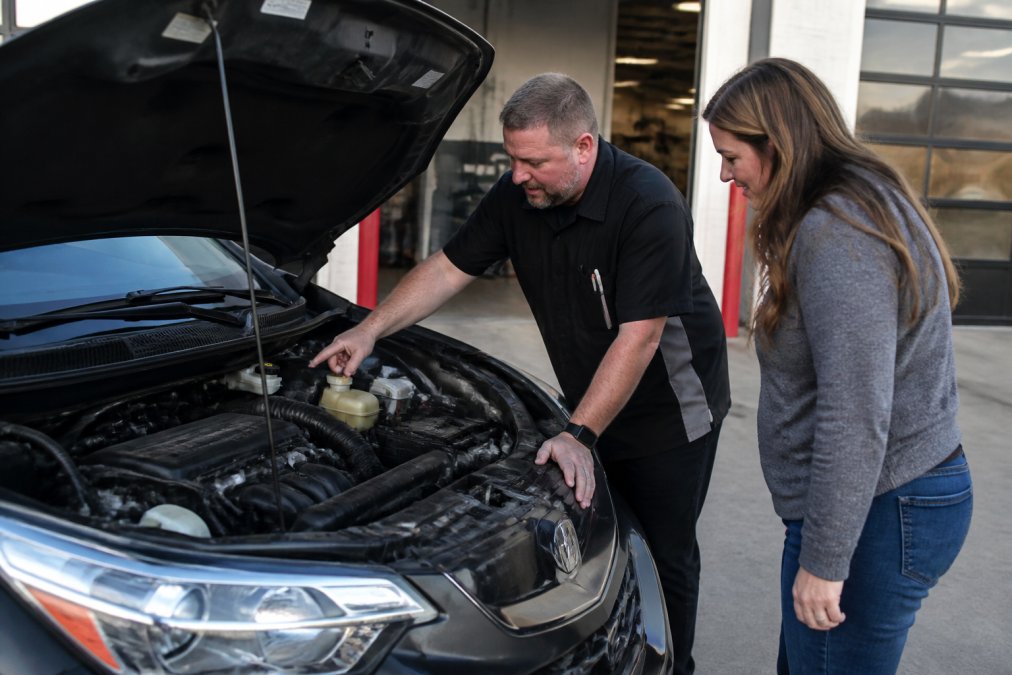
2019 Toyota RAV4, Best for Reliability and Resale Value
The 2019 Toyota RAV4 received a complete redesign that year, introducing fresh styling, a smooth ride, and efficient performance.
Toyota's reputation for durability means RAV4 models hold their value exceptionally well.
Finding lower-mileage examples under $20k can be challenging due to high demand, but when available, the RAV4 delivers dependable long-term ownership.
2020 Mazda CX-5, Best for Driving Dynamics and Premium Feel
The 2020 Mazda CX-5 combines excellent driving dynamics with high-quality interior materials and strong reliability ratings.
It delivers a premium feel at a reasonable price point with competitive fuel economy and a refined ownership experience.
2020 Nissan Murano, Best for Comfort and Smooth Ride
The 2020 Nissan Murano offers a comfortable, smooth ride and stylish design with spacious interior and above-average reliability ideal for longer commutes and family trips.
2020 Hyundai Santa Fe, Best for Families Needing Three-Row Seating
The 2020 Hyundai Santa Fe balances features, comfort, and value for families.
Available three-row seating provides flexibility for larger groups with strong safety ratings and generous standard features.
2017 Toyota Highlander, Best Three-Row SUV for Families
The 2017 Toyota Highlander delivers family-friendly capability with a powerful 3.5L V6 engine and top-notch safety features.
Its excellent long-term reliability and quiet, comfortable cabin make it ideal for families prioritizing durability and peace of mind.
2020 Subaru Crosstrek, Best for All-Wheel Drive and Outdoor Adventures
The 2020 Subaru Crosstrek is purpose-built for buyers in challenging weather or those seeking adventure-ready capability.
Standard Symmetrical All-Wheel Drive provides enhanced traction with strong fuel efficiency and good ground clearance for light off-roading.
2016 Lexus RX 350, Best Luxury SUV for Long-Term Durability
The 2016 Lexus RX 350 is renowned for exceptional build quality and longevity, with many examples exceeding 200,000 miles with proper maintenance.
Its durable 3.5L V6 engine, luxurious interior, and smooth, quiet ride create a premium ownership experience at a fraction of original cost.
2017 Acura MDX, Best Luxury Three-Row SUV
The 2017 Acura MDX blends performance, comfort, and advanced technology in a three-row luxury package with spacious interior, strong V6 engine, and high-quality materials.
Most Reliable Used SUVs: What Matters Most
Reliability is the foundation of a smart used SUV purchase. Toyota and Honda lead reliability rankings for used SUVs, with models like the RAV4 and CR-V demonstrating exceptional durability.
Lexus models, built on Toyota platforms, deliver similar reliability with added luxury.
Subaru and Mazda offer strong reliability with distinct advantages: Subaru for all-wheel-drive capability and Mazda for driving engagement.
What separates a reliable used SUV from a problematic one often comes down to maintenance history.
A vehicle with complete service records, oil changes at recommended intervals, fluid checks, and timely repairs signals an owner who prioritized care.
Gaps in maintenance records raise red flags about potential hidden damage or deferred repairs.
Mileage matters, but it's not the whole story. A well-maintained vehicle with 100,000 miles may be more reliable than a poorly maintained one with 60,000 miles.
Focus on the ratio of mileage to age and the quality of documented care.
Powertrain warranty coverage provides crucial protection.
Ask for Doug Cupples to learn about thoroughly inspected and reconditioned pre-owned vehicles backed by a 6-year/100,000-mile Powertrain Limited Warranty, plus a 12-Month/12,000-Mile Bumper-to-Bumper Limited Warranty.
This coverage protects against major mechanical failures and gives buyers confidence in their purchase.
Used SUV Inspection Checklist Before You Buy
Before committing to any pre-owned SUV under $20k, a thorough inspection protects against costly surprises.
Exterior and Body Condition
Check for rust, dents, mismatched paint, and signs of previous accidents. Look along trim lines and door edges for evidence of repainting.
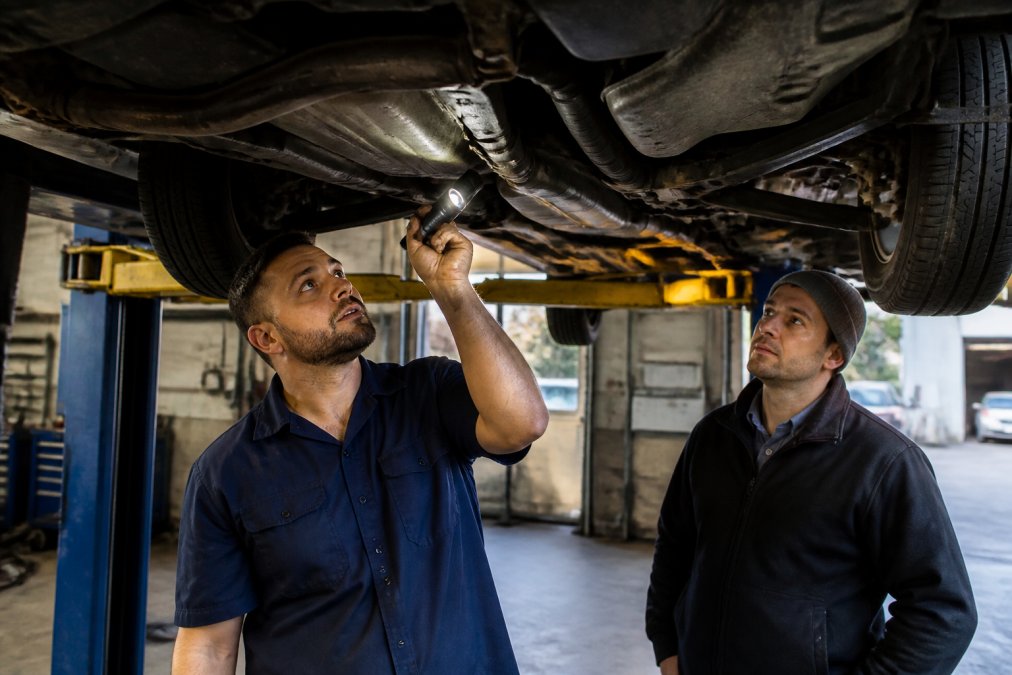
Verify that all doors, windows, and locks operate smoothly. Check underneath the vehicle for leaks; oil stains or fluid drips suggest mechanical issues.
Engine and Mechanical Systems
Start the engine and listen for unusual noises. Check all fluid levels: oil, coolant, transmission fluid, and brake fluid. Look for leaks around gaskets and seals.
Request a complete vehicle history report to verify no major engine work or transmission problems.
Transmission and Drivetrain
Push now for a set of free Universal Weather Teck mats →
Test the transmission by shifting smoothly through all gears. Listen for hesitation, grinding, or delayed engagement. Check that all-wheel drive (if equipped) engages smoothly.
Test acceleration and braking response.
Interior and Electronics
Verify that all controls function: climate system, windows, locks, seats, and infotainment. Check for water stains or odors suggesting previous flooding.
Test the air conditioning and heating thoroughly. Verify all safety features work: airbags, stability control, and any driver-assist technology.
Tires and Suspension
Inspect tire tread depth and condition. Check for uneven wear patterns suggesting alignment issues.
Test the suspension by pressing down on each corner of the vehicle; it should bounce back smoothly without excessive movement.
Test Drive Assessment
Take the vehicle on a varied test drive: city streets, highway, and parking maneuvers. Listen for noises, vibrations, or handling issues. Test braking response and steering feedback.
Note any warning lights on the dashboard.
How to Finance a Used Car: Your Roadmap
Financing a pre-owned SUV under $20k requires understanding your options, calculating true affordability, and securing favorable terms.
Determine Your Budget and Down Payment
Calculate what monthly payment fits comfortably within your budget. A common guideline suggests keeping vehicle payments to 10-15% of monthly gross income.
Determine your down payment; larger down payments reduce monthly payments and interest costs.
Check Your Credit Score
Your credit score significantly affects interest rates. Review your credit report before applying for financing and dispute any errors.
If your score needs improvement, consider waiting a few months before purchasing or exploring co-signer options.
Compare Financing Sources
Banks, credit unions, and dealership financing each offer different rates and terms.
Get pre-approved through your bank or credit union before visiting the dealership; this gives you negotiating power. Compare annual percentage rates (APR) across sources.
Even a 1% difference in APR can save hundreds of dollars over a five-year loan.
Evaluate Loan Terms
Shorter loan terms (36-48 months) mean higher monthly payments but significantly less total interest paid. Longer terms (60-72 months) lower monthly payments but increase total interest.
Balance affordability with total cost.
Factor in Insurance and Maintenance
Pre-owned vehicles typically cost more to insure than newer models. Budget for maintenance: older vehicles may need repairs sooner.
Certified pre-owned vehicles with warranty coverage reduce this uncertainty.
Negotiate the Purchase Price
Use your inspection findings and market research to negotiate fairly. Bring documentation of comparable vehicles and any needed repairs to justify your offer.
Be prepared to walk away if the deal doesn't meet your needs.
Finalize the Purchase
Review all paperwork carefully before signing. Verify the vehicle identification number (VIN), mileage, and warranty details. Understand what's covered under any warranty.
Ask about extended warranty options if available.
| Step | Focus | Timeline |
|---|---|---|
| 1. Budget Assessment | Determine affordable payment range | Before shopping |
| 2. Credit Review | Check score and dispute errors | 1-2 weeks |
| 3. Pre-Approval | Get financing terms from bank/credit union | 1 week |
| 4. Vehicle Selection | Research and test drive options | 2-4 weeks |
| 5. Inspection | Have certified technician evaluate | 1-2 days |
| 6. Negotiation | Discuss price based on inspection results | 1-3 days |
| 7. Finalization | Complete paperwork and take delivery | 1 day |
Purchasing a pre-owned SUV under $20k is achievable when buyers prioritize reliability, conduct thorough inspections, and secure favorable financing.
The vehicles covered in this guide represent proven options with strong track records.
Working with a professional sales team who genuinely cares about matching the right vehicle to your lifestyle makes the entire process smoother and more confident.
Ask for Doug Cupples @ 641-521-8725 text or call.
What good is it for someone to gain the whole world, yet forfeit their soul?
Frequently Asked Questions
What is the most reliable used SUV under $20,000?
The 2019 Toyota RAV4 and 2019 Honda CR-V consistently rank highest for reliability in the used market under $20,000.
Both offer exceptional build quality, strong resale value, and proven long-term durability. The Toyota RAV4 excels in fuel efficiency, while the Honda CR-V provides more interior space.
For luxury buyers, the 2016 Lexus RX 350 is known for surpassing 200,000 miles with proper maintenance.
When shopping for pre-owned SUVs under $20k, ask for Doug Cupples to verify maintenance records and warranty coverage.
What should I look for when inspecting a pre-owned SUV?
Start with a vehicle history report to check for accidents and title status. Inspect the exterior for rust, dents, and paint consistency.
Check all fluids (oil, coolant, transmission), tire condition and tread depth, and brake wear. Test all electrical systems, the infotainment system, and climate control.
Listen for unusual engine noises and check the transmission for smooth shifting. Always take a test drive on both city and highway roads.
Have a certified technician perform a complete mechanical inspection before purchase. Doug Cupples uses thorough inspection protocols on all certified pre-owned vehicles.
How do I know if a used SUV has been properly maintained?
Request the complete maintenance records from the seller or dealer. Look for regular oil changes, filter replacements, fluid checks, and scheduled service intervals.
A well-maintained vehicle will have documentation showing consistent care at authorized service centers.
Certified pre-owned vehicles from dealerships like Lauterbach Buick-GMC come with verified maintenance history and are reconditioned by certified technicians using genuine parts.
Check the vehicle history report for service records and ask the dealer about any major repairs or recalls that have been completed.
Can I find a low-mileage SUV for under $20,000?
Finding low-mileage pre-owned SUVs under $20,000 is challenging but possible, especially with 2019-2020 model years.
Popular models like the Toyota RAV4 and Honda CR-V tend to have higher mileage at this price point due to strong demand and resale value.
Three-row SUVs like the Hyundai Santa Fe and Toyota Highlander may offer better mileage availability at this price.
Certified pre-owned inventory often includes lower-mileage examples with warranty protection.
Ask for Doug Cupples to check current inventory for vehicles matching your mileage and budget requirements.
What financing options are available for used SUVs?
Most buyers finance used vehicles through traditional auto loans from banks, credit unions, or dealerships. A larger down payment reduces the loan amount and monthly payments.
Interest rates depend on your credit score, loan term, and vehicle age. Pre-approval from your bank or credit union gives you negotiating power.
Certified pre-owned vehicles often qualify for manufacturer-backed financing incentives. Consider the total cost of ownership, including insurance, maintenance, and fuel.
Doug Cupples can discuss financing options and help you find a payment plan that fits your budget.
This article was written using GrandRanker
DougCupples content is educational market commentary, not individualized financial or purchasing advice. Figures reflect the reporting dates shown and move quickly — confirm current numbers before you act on them.
Before you use this information
Auto market guidance works best when it is tied to a real vehicle, a real quote, and a real deadline.
If this article changes how you are thinking about a purchase, save the listing, the VIN, the mileage, the asking price, and the city where the vehicle is advertised.
For a trade-in question, write down your payoff amount, the vehicle condition, and any independent appraisal you already have.
For a financing question, compare the APR, the term, the down payment, the total amount financed, and the full out-the-door number.
Those details make it much easier to separate a fair Central Iowa deal from a monthly payment that only looks comfortable because the loan got longer.
When a price looks appealing, check whether the discount is attached to a required add-on, a longer term, a higher rate, or a trade allowance that moved money from one line to another.
When a vehicle looks expensive, check local supply before you walk away; a scarce trim can hold its number while a similar model across town has room to move.
The practical move is to slow the deal down long enough to compare the total cost, not just the headline price or the payment printed in large type.
Doug can help turn those details into better questions for the salesperson, the sales manager, or the finance office before you sign.
That is especially useful when the decision is close, because small changes in rate, term, fees, trade allowance, or timing can move the real cost by hundreds or thousands of dollars.
If you are shopping around Newton, Des Moines, or the surrounding Central Iowa market, local inventory and dealer supply matter more than a national headline.
- Ask for the out-the-door price in writing before you discuss payment.
- Compare similar vehicles within driving distance, not national averages alone.
- Check how long the specific VIN has been in stock.
- Confirm whether each fee is required by the state, the lender, or the dealership.