Table of Contents
- Your Pre-Purchase Car Inspection Checklist: Where to Start
- How to Test Drive a Used Car the Right Way
- Questions to Ask When Buying a Used Car
- Used Car Inspection Service Cost and When to Hire a Pro
Last Updated: August 8, 2026
Your Pre-Purchase Car Inspection Checklist: Where to Start
Knowing how to inspect used cars before buying saves thousands in unexpected repairs.
This guide from Doug Cupples at Lauterbach Buick-GMC in Newton, Iowa walks through every critical step so Central Iowa buyers can shop with confidence.
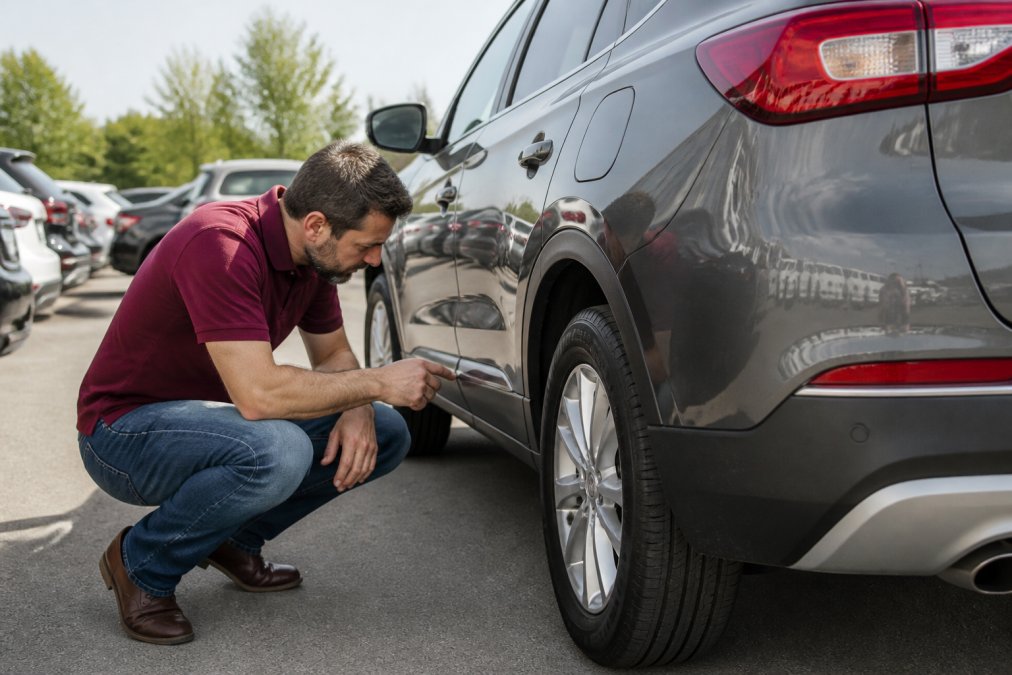
Start the inspection in full daylight. Artificial lighting masks paint imperfections, rust, and body filler. Work through this checklist systematically before starting the engine.
Exterior Body Panel Inspection
Run a flat hand along each body panel. Waves, ripples, or abrupt texture changes suggest previous collision repair or filler work.
Check panel gaps: consistent spacing between doors, hood, and trunk indicates a structurally sound vehicle. Mismatched gaps point to frame damage or poor repair work.
Look at paint color under direct sunlight, slight variation between adjacent panels often means a panel was repainted after an accident.
Inspect wheel wells and rocker panels closely for rust corrosion.
Under-Carriage and Frame Check
Get low and look underneath. Frame damage is the single most disqualifying finding on any used vehicle.
Look for bent metal, fresh undercoating applied in patches, and any welding that doesn't match the factory finish.
According to the National Highway Traffic Safety Administration's vehicle safety resources, structural integrity is the foundation of crash protection, and compromised frames cannot be safely restored to original specifications.
Checking for Flood Damage
Flood-damaged vehicles are a serious risk. Pull back floor mats and check for waterline stains, mud residue, or musty smells. Check the spare tire well for standing water or rust.
Inspect seat rail bolts: consistent rust on those bolts combined with clean upper surfaces is a classic flood indicator.
Engine Bay and Fluid Checks
Visit the vehicle before it has been driven that day. Check the coolant reservoir for a milky or oily appearance, which signals a head gasket leak.
Pull the oil dipstick and look for sludge, dark grit, or caramel-colored foam. Examine the engine bay for fluid leaks around hoses, the valve cover, and transmission lines.
Check battery terminals for heavy corrosion and look for wiring that appears spliced or jury-rigged.
Digital Diagnostic Tool Usage
An OBD-II scanner plugs into the diagnostic port under the dashboard on the driver's side. Any vehicle built after 1996 has one.
The scanner reads stored fault codes, including codes that have been cleared recently. A cleared check engine light with no codes can indicate someone erased the codes right before the sale.
Ask the seller to demonstrate a live OBD-II scan, or bring a basic scanner available at most auto parts retailers.
Interior Wear and Tear Assessment
Odometer reading and interior condition should match.
A vehicle claiming low miles but showing heavily worn driver's seat bolster, shiny steering wheel, and faded pedal rubber has likely been driven hard.
Check all electrical components: windows, mirrors, locks, infotainment screen, and air conditioning performance.
Test the air conditioning on its coldest setting and confirm it blows cold within 30 seconds.
Tire Condition and Tread Depth
Mismatched tires suggest uneven wear issues, which often point to alignment or suspension problems.
Check tread depth using the penny test: insert a penny with Lincoln's head facing down into the tread groove. If the top of his head is visible, the tires need replacement.
Uneven tread wear across a single tire indicates suspension or alignment issues.
How to Test Drive a Used Car the Right Way
A test drive is a diagnostic tool, not a formality. Request at least 20 to 30 minutes of drive time.
The route should include highway speeds, a hard stop from 45 mph, a tight parking lot maneuver, and ideally a rough road surface.

What to listen and feel for:
- Suspension noise: Hit a speed bump slowly. Clunks, rattles, or squeaks indicate worn struts, sway bar links, or ball joints.
- Transmission shifting: Accelerate through all gears smoothly and then decelerate. Hesitation, hard shifts, or shudder between gears on an automatic is a red flag.
- Brake pedal feel: The pedal should be firm and consistent. A spongy pedal, vibration under braking, or pulling to one side indicates brake system issues.
- Steering: The wheel should return to center naturally after a turn. Looseness, vibration at highway speeds, or resistance points to worn components.
Cold start behavior matters enormously. Excessive exhaust smoke on startup, especially blue or white smoke, signals oil burning or coolant intrusion.
A small puff of white vapor on a cold morning is normal condensation.
Questions to Ask When Buying a Used Car
The right questions separate prepared buyers from those who get surprised later.
Vehicle History and Documentation
Push now for a set of free Universal Weather Teck mats →
- Has this vehicle ever had a salvage title or rebuilt title?
- Can you provide the full vehicle history report, including the VIN check?
- Are there service records showing regular oil changes and scheduled maintenance?
- Has this vehicle ever been in a flood or declared a total loss by an insurance company?
A vehicle history report from the National Motor Vehicle Title Information System provides title history, odometer readings at each registration, and reported accidents.
Always run one before purchasing.
Mechanical and Inspection Questions
- Has a pre-purchase inspection been performed by an independent mechanic?
- Are there any known mechanical issues or warning lights that have appeared recently?
- What repairs have been made in the last 12 months?
Negotiation Based on Findings
Inspection findings are negotiation tools.
A tire set needing replacement, a service record gap, a minor paint repair, or a pending OBD-II code all represent documented costs the buyer will absorb after purchase.
List each finding and assign a realistic repair estimate. Present that total as a straightforward deduction from the asking price.
EV and Hybrid Battery Health
Buyers considering a used hybrid or electric vehicle should ask for a state-of-health report from the manufacturer's diagnostic software.
Battery degradation directly affects range and resale value. A battery retaining less than 80 percent of its original capacity represents a significant cost consideration.
Used Car Inspection Service and When to Hire a Pro
A professional pre-purchase inspection is one of the most cost-effective steps a used car buyer can take.
An independent mechanic performs a systematic inspection on a lift, checks all fluid levels and conditions, scans for fault codes, and provides a written report.
When a professional PPI is non-negotiable:
- The vehicle is a private-party sale with no dealer accountability
- The asking price is significant enough that a major repair would be financially painful
- The vehicle has a rebuilt title or any history of reported accidents
- The seller is reluctant to allow an independent inspection
According to consumer vehicle buying guidance from the Federal Trade Commission, buyers have the right to have any used vehicle inspected by an independent mechanic before purchase.
Any seller who refuses should be avoided.
What a PPI typically covers:
| Inspection Area | What the Mechanic Checks | Why It Matters |
|---|---|---|
| Frame and under-carriage | Welds, bends, rust corrosion | Structural safety and repairability |
| Engine and fluids | Oil sludge, leaks, coolant condition | Predicts near-term repair costs |
| Transmission | Fluid condition, shift behavior | Transmission replacement is costly |
| Brakes and suspension | Pad thickness, noise, wear | Safety and handling |
| Electrical and OBD-II | Fault codes, pending codes | Hidden issues before they surface |
| Tires | Tread depth, wear pattern | Alignment and suspension clues |
Contact local independent mechanics or a certified service department for current rates.
The Post-Inspection Checklist: Before You Sign
- Exterior panels checked for gaps, filler, and paint mismatch
- Under-carriage inspected for frame damage and rust
- Flood damage indicators checked (floor mats, spare well, seat bolts)
- Engine bay cold-started and fluids inspected
- OBD-II scan completed with no active or pending codes
- Interior wear consistent with stated odometer reading
- All electrical components and air conditioning tested
- Tires checked for tread depth and even wear pattern
- Vehicle history report reviewed (VIN check, title status, service records)
- Test drive completed including highway speeds and hard braking
- Independent mechanic PPI completed (for private sales or high-value purchases)
- Spare tire, jack, and lug wrench confirmed present
Buyers who work through this list systematically make far better decisions than those who rely on first impressions.
At Lauterbach Buick-GMC in Newton, Iowa, Doug Cupples and the team put every pre-owned vehicle through a thorough reconditioning process before it reaches the lot.
Certified technicians use genuine GM parts, and select vehicles carry factory-backed warranty coverage.
Ask for Doug Cupples at 641-521-8725.
Buying a used vehicle without a proper inspection is one of the most common and avoidable financial mistakes in the car-buying process.
The steps above give any buyer the tools to inspect used cars with the same systematic approach a professional technician would use.
For families and commuters across Central Iowa who want that assurance built in from the start, the certified pre-owned inventory at Lauterbach Buick-GMC offers thoroughly inspected vehicles backed by real warranty coverage.
Ask for Doug Cupples at 641-521-8725.
"What good is it for someone to gain the whole world, yet forfeit their soul?"
Frequently Asked Questions
How do I properly check a used car before buying?
Start by inspecting the exterior body panels for uneven gaps, rust corrosion, or mismatched paint that may signal prior collision repairs.
Check under the hood for fluid leaks, oil sludge, and coolant reservoir levels. Run a VIN check and review the vehicle history report for salvage or rebuilt title status.
Plug in an OBD-II scanner to read any stored fault codes, then take a thorough test drive. Ask for Doug Cupples at 641-521-8725 for guidance on pre-owned vehicles at Lauterbach Buick-GMC.
What are the biggest red flags when buying a used car?
A salvage title or rebuilt title is the most serious warning sign, as it indicates the vehicle was declared a total loss.
Other red flags include mismatched body panel gaps suggesting frame damage, signs of flood damage like musty odors or water stains under the carpet, a check engine light that stays on, excessive exhaust smoke during a cold start, and a seller who refuses a pre-purchase inspection by an independent mechanic.
Inconsistent odometer readings versus service records also deserve serious scrutiny.
Should I get a pre-purchase inspection from a mechanic?
Yes, an independent pre-purchase inspection is one of the smartest steps you can take before buying any used vehicle.
A certified mechanic can identify issues invisible to the untrained eye, including hidden frame damage, transmission problems, and brake wear.
The used car inspection service cost is typically modest compared to the repair bills you could face without it.
Thoroughly inspected, reconditioned pre-owned vehicles from a certified dealership reduce this risk considerably, ask for Doug Cupples at 641-521-8725.
What questions should I ask when buying a used car?
Ask for the complete service records to verify routine maintenance history. Request a vehicle history report to check for prior accidents, flood damage, or a salvage title.
Ask whether the car has ever had frame or structural repairs, how many previous owners it had, and whether an independent mechanic can inspect it before purchase.
For EVs or hybrids, ask specifically about battery health and remaining warranty coverage. A straightforward seller or dealership will answer all of these without hesitation.
This article was written using GrandRanker
DougCupples content is educational market commentary, not individualized financial or purchasing advice. Figures reflect the reporting dates shown and move quickly — confirm current numbers before you act on them.
Before you use this information
Auto market guidance works best when it is tied to a real vehicle, a real quote, and a real deadline.
If this article changes how you are thinking about a purchase, save the listing, the VIN, the mileage, the asking price, and the city where the vehicle is advertised.
For a trade-in question, write down your payoff amount, the vehicle condition, and any independent appraisal you already have.
For a financing question, compare the APR, the term, the down payment, the total amount financed, and the full out-the-door number.
Those details make it much easier to separate a fair Central Iowa deal from a monthly payment that only looks comfortable because the loan got longer.
When a price looks appealing, check whether the discount is attached to a required add-on, a longer term, a higher rate, or a trade allowance that moved money from one line to another.
When a vehicle looks expensive, check local supply before you walk away; a scarce trim can hold its number while a similar model across town has room to move.
The practical move is to slow the deal down long enough to compare the total cost, not just the headline price or the payment printed in large type.
Doug can help turn those details into better questions for the salesperson, the sales manager, or the finance office before you sign.
That is especially useful when the decision is close, because small changes in rate, term, fees, trade allowance, or timing can move the real cost by hundreds or thousands of dollars.
If you are shopping around Newton, Des Moines, or the surrounding Central Iowa market, local inventory and dealer supply matter more than a national headline.
- Ask for the out-the-door price in writing before you discuss payment.
- Compare similar vehicles within driving distance, not national averages alone.
- Check how long the specific VIN has been in stock.
- Confirm whether each fee is required by the state, the lender, or the dealership.