Last Updated: September 6, 2026
Worn brake pads are the most common cause of reduced stopping power on a pickup truck, and catching them early protects your rotors and keeps your family safe.
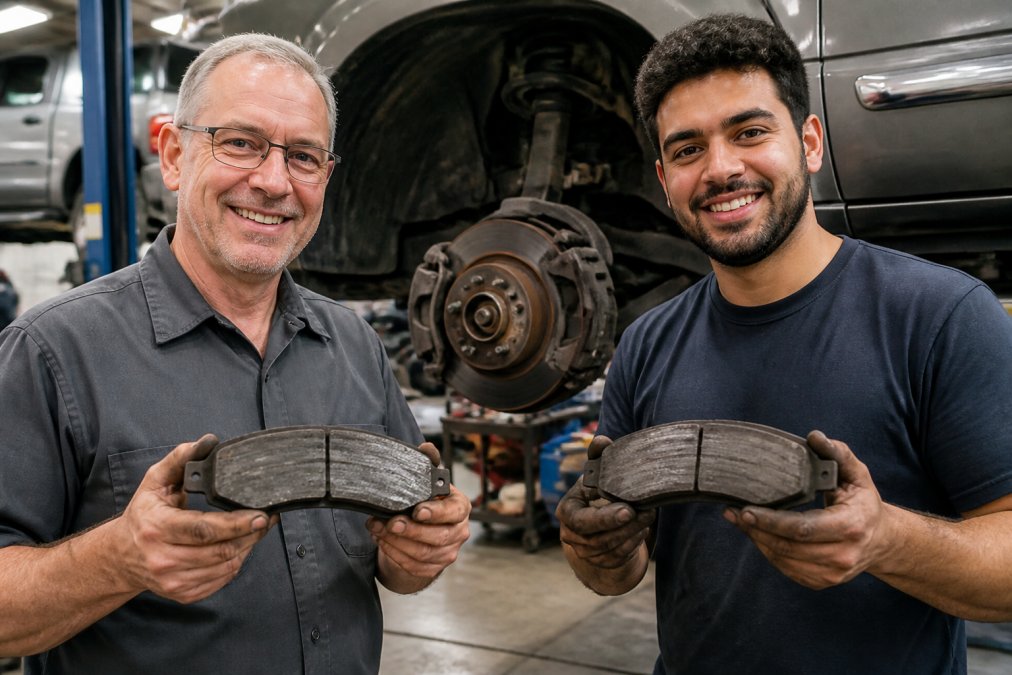
This guide covers the signs of worn pads, how to measure remaining friction material, and when replacement is non-negotiable. Ask for Doug Cupples.
Truck brakes face higher demands than car brakes; added weight from towing or hauling generates more heat and faster pad wear.
Signs of Worn Brake Pads on a Truck
The most reliable warning sign is a high-pitched squeal when braking, the wear indicator scraping the rotor once friction material is low.
Vibrations in the pedal or steering wheel indicate a warped rotor or uneven pad wear. Increased pedal travel means the hydraulic system is working harder because pads are thin.
Reduced braking responsiveness is the most dangerous symptom, inspect immediately if stopping takes longer or the pedal feels spongy.
Grinding noise means pads are completely worn and the metal backing plate is scoring the rotor.
How to Measure Brake Pad Thickness
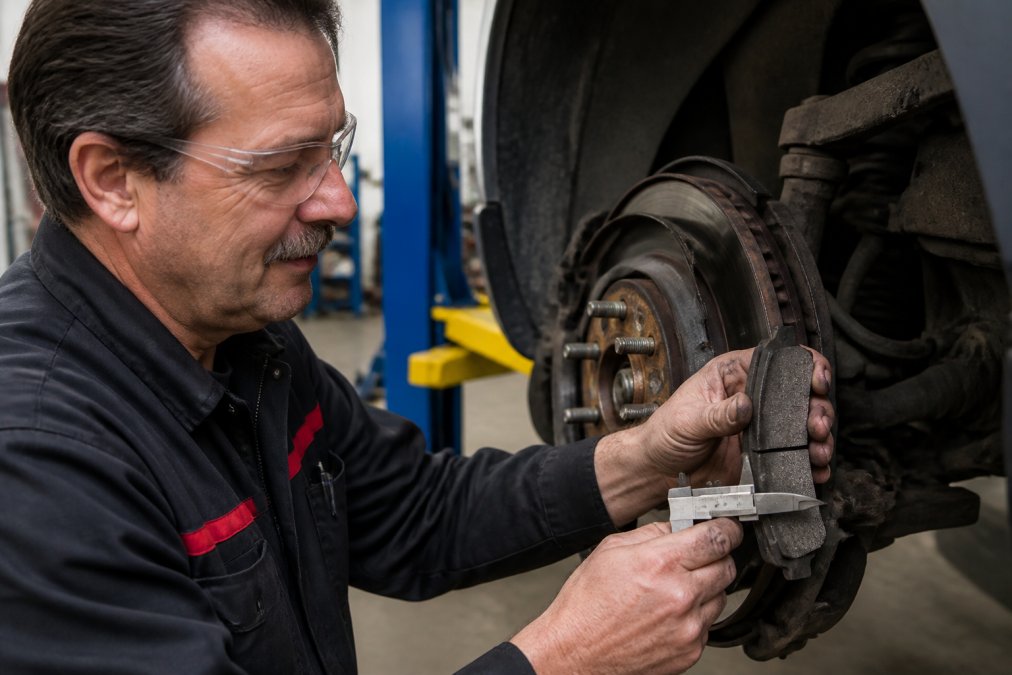
Measuring brake pad thickness requires only a gauge or basic ruler. Remove the wheel to see the pads clearly and inspect the rotor for scoring.
Loosen the lug nuts, jack up the truck securely, and remove the wheel.
Insert the gauge between the backing plate and rotor on the outer pad, then repeat on the inner pad, which often wears faster.
Push now for a set of free Universal Weather Teck mats with purchase of a used or new Car →
New truck pads have about 10 to 12 millimeters of friction material. Replace at 3 millimeters or less; plan for replacement at 4 millimeters for a safety margin.
Brake Pad Replacement Interval and Best Practices
There is no single replacement interval for every truck. Commuting trucks may see pads last beyond 50,000 miles, while towing or off-road work might need new pads at 25,000 miles.
Follow your owner’s manual and inspect pads at every oil change.
Towing, hilly terrain, stop-and-go traffic, dust, and road salt all accelerate wear. Heavy use can cause brake fade when the system overheats.
Replace pads in axle sets to keep braking balanced. Inspect brake hardware and caliper slides, have rotors checked, and flush brake fluid per the manufacturer’s schedule.
| Symptom | Likely Cause | Action Required |
|---|---|---|
| High-pitched squeal | Wear indicator touching rotor | Replace pads soon |
| Pulsation in pedal | Warped rotor or uneven pad wear | Inspect rotors and pads |
| Grinding noise | Metal-on-metal contact | Replace pads and rotors immediately |
| Low pedal feel | Thin pads or low brake fluid | Inspect system, top off fluid |
Uneven wear often points to sticking caliper slide pins or a hanging caliper piston, which require a qualified technician.
For truck owners in Central Iowa, Doug Cupples at Lauterbach Buick-GMC offers expert maintenance with genuine GM parts.
Ask for Doug Cupples at 641-521-8725, text or call, to schedule your brake inspection. What good is it for someone to gain the whole world, yet forfeit their soul?
Keeping your truck’s brakes in top condition comes down to regular inspection. When you need expert care, Doug Cupples and the certified service team use genuine GM parts.
Schedule your brake service today and drive with confidence. Ask for Doug Cupples.
DougCupples content is educational market commentary, not individualized financial or purchasing advice. Figures reflect the reporting dates shown and move quickly — confirm current numbers before you act on them.
Before you use this information
Auto market guidance works best when it is tied to a real vehicle, a real quote, and a real deadline.
If this article changes how you are thinking about a purchase, save the listing, the VIN, the mileage, the asking price, and the city where the vehicle is advertised.
For a trade-in question, write down your payoff amount, the vehicle condition, and any independent appraisal you already have.
For a financing question, compare the APR, the term, the down payment, the total amount financed, and the full out-the-door number.
Those details make it much easier to separate a fair Central Iowa deal from a monthly payment that only looks comfortable because the loan got longer.
When a price looks appealing, check whether the discount is attached to a required add-on, a longer term, a higher rate, or a trade allowance that moved money from one line to another.
When a vehicle looks expensive, check local supply before you walk away; a scarce trim can hold its number while a similar model across town has room to move.
The practical move is to slow the deal down long enough to compare the total cost, not just the headline price or the payment printed in large type.
Doug can help turn those details into better questions for the salesperson, the sales manager, or the finance office before you sign.
That is especially useful when the decision is close, because small changes in rate, term, fees, trade allowance, or timing can move the real cost by hundreds or thousands of dollars.
If you are shopping around Newton, Des Moines, or the surrounding Central Iowa market, local inventory and dealer supply matter more than a national headline.
- Ask for the out-the-door price in writing before you discuss payment.
- Compare similar vehicles within driving distance, not national averages alone.
- Check how long the specific VIN has been in stock.
- Confirm whether each fee is required by the state, the lender, or the dealership.