
Last Updated: October 12, 2026
How to Check GMC Transmission Fluid Levels: The Basics
Checking your GMC transmission fluid is a simple DIY task that tells you whether your transmission is running safely.
Fluid keeps your transmission shifting smoothly and running cool. Low fluid causes rough shifts, overheating, and damage; high fluid causes foaming and leaks.
You can check GMC transmission fluid levels at home with a clean rag and about five minutes.
Most GMC trucks and SUVs use a dipstick; some newer models have a sealed system.
GMC Transmission Fluid Dipstick Location and Removal
The transmission dipstick sits near the back of the engine bay, a thin metal rod with a handle on top.
On most GMC trucks it's on the driver's side or center of the engine.
Steps to remove the dipstick:
- Locate the dipstick handle (usually yellow or orange)
- Pull it straight up, wipe it clean, and reinsert it fully
- Pull it out again to read the level
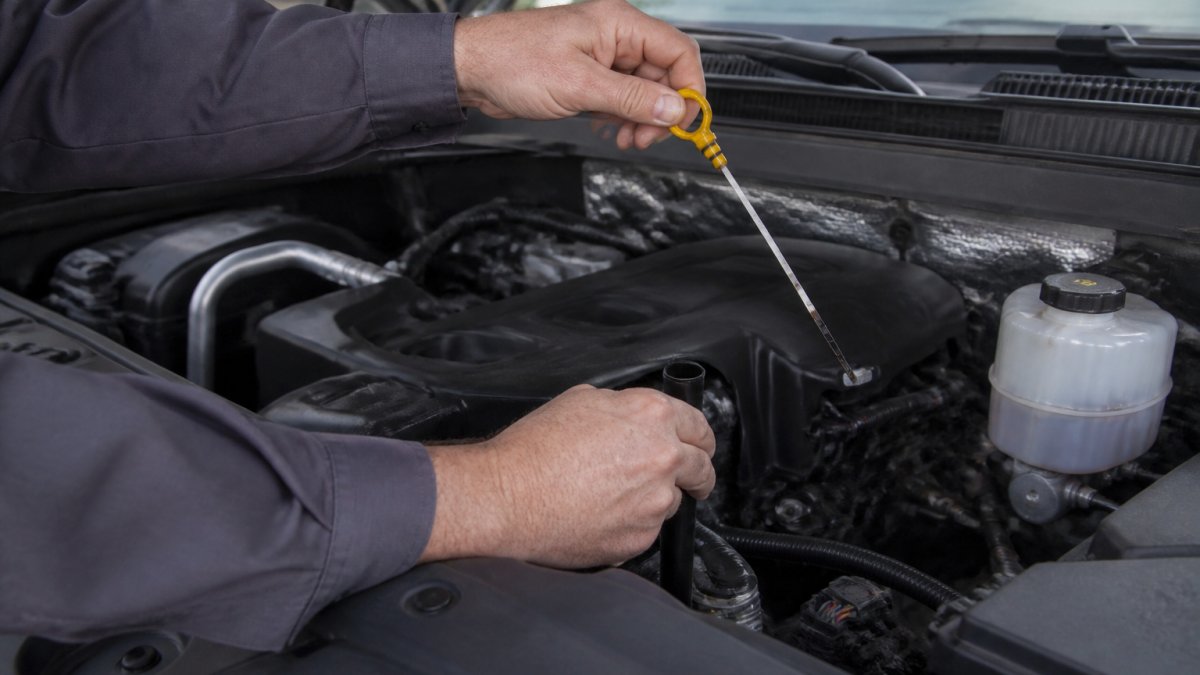
The dipstick has Full and Low marks; your level should be between them with the engine at operating temperature, since cold checks read low.
Push now for a set of free Universal Weather Teck mats with purchase of a used or new Car →
Ask for Doug Cupples for expert help with your GMC maintenance.
How to Check Transmission Fluid Without a Dipstick
Some newer GMC models use a sealed transmission with no dipstick.
For sealed transmissions, a scan tool connects to your GMC's computer and reads transmission temperature and fluid status.
Your GMC may have a fill plug underneath instead; if fluid drips out when you remove it, the level is correct.
If your GMC has a sealed system and you're unsure, bring it to a certified technician to run a diagnostic and top up the fluid with genuine GM parts.
What good is it for someone to gain the whole world, yet forfeit their soul?
Ask for Doug Cupples @ 641-521-8725 text or call.
DougCupples content is educational market commentary, not individualized financial or purchasing advice. Figures reflect the reporting dates shown and move quickly — confirm current numbers before you act on them.
Before you use this information
Auto market guidance works best when it is tied to a real vehicle, a real quote, and a real deadline.
If this article changes how you are thinking about a purchase, save the listing, the VIN, the mileage, the asking price, and the city where the vehicle is advertised.
For a trade-in question, write down your payoff amount, the vehicle condition, and any independent appraisal you already have.
For a financing question, compare the APR, the term, the down payment, the total amount financed, and the full out-the-door number.
Those details make it much easier to separate a fair Central Iowa deal from a monthly payment that only looks comfortable because the loan got longer.
When a price looks appealing, check whether the discount is attached to a required add-on, a longer term, a higher rate, or a trade allowance that moved money from one line to another.
When a vehicle looks expensive, check local supply before you walk away; a scarce trim can hold its number while a similar model across town has room to move.
The practical move is to slow the deal down long enough to compare the total cost, not just the headline price or the payment printed in large type.
Doug can help turn those details into better questions for the salesperson, the sales manager, or the finance office before you sign.
That is especially useful when the decision is close, because small changes in rate, term, fees, trade allowance, or timing can move the real cost by hundreds or thousands of dollars.
If you are shopping around Newton, Des Moines, or the surrounding Central Iowa market, local inventory and dealer supply matter more than a national headline.
- Ask for the out-the-door price in writing before you discuss payment.
- Compare similar vehicles within driving distance, not national averages alone.
- Check how long the specific VIN has been in stock.
- Confirm whether each fee is required by the state, the lender, or the dealership.