Table of Contents
- What Makes Genuine GM Parts Different From the Rest
- OEM vs Aftermarket Parts: Pros and Cons for GM Owners
- GM Parts Warranty Coverage and What It Protects
- Conclusion: Protect Your Investment With Genuine GM Parts
Last Updated: August 7, 2026
What Makes Genuine GM Parts Different From the Rest
Genuine GM parts are components designed, engineered, and tested specifically for General Motors vehicles, meeting the exact factory specifications your Buick or GMC was built to.
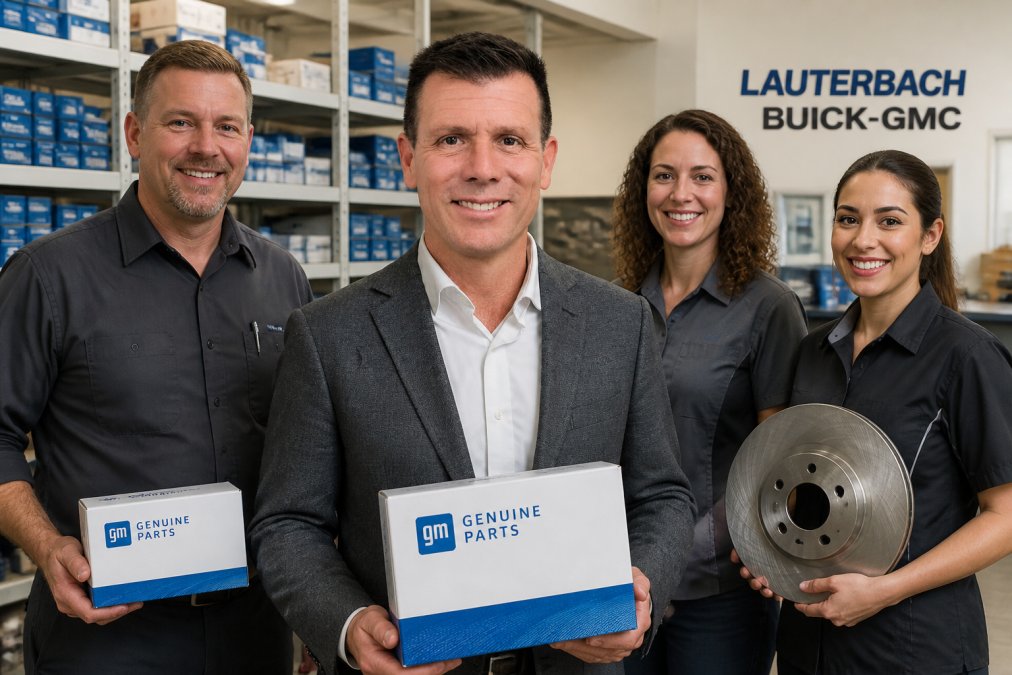
At Doug Cupples and the certified service team at Lauterbach Buick-GMC in Newton, Iowa, every repair relies on factory-certified components because the difference between a part that fits and a part that truly belongs is not always visible until something goes wrong.
The core distinction comes down to precision engineering.
Every genuine GM component is manufactured to match the exact tolerances, material grades, and performance benchmarks of the original part.
Aftermarket alternatives approximate those specs, but approximation is not accuracy.
A brake caliper that is 2% off in its hydraulic bore diameter can introduce problems that are difficult to trace and expensive to fix.
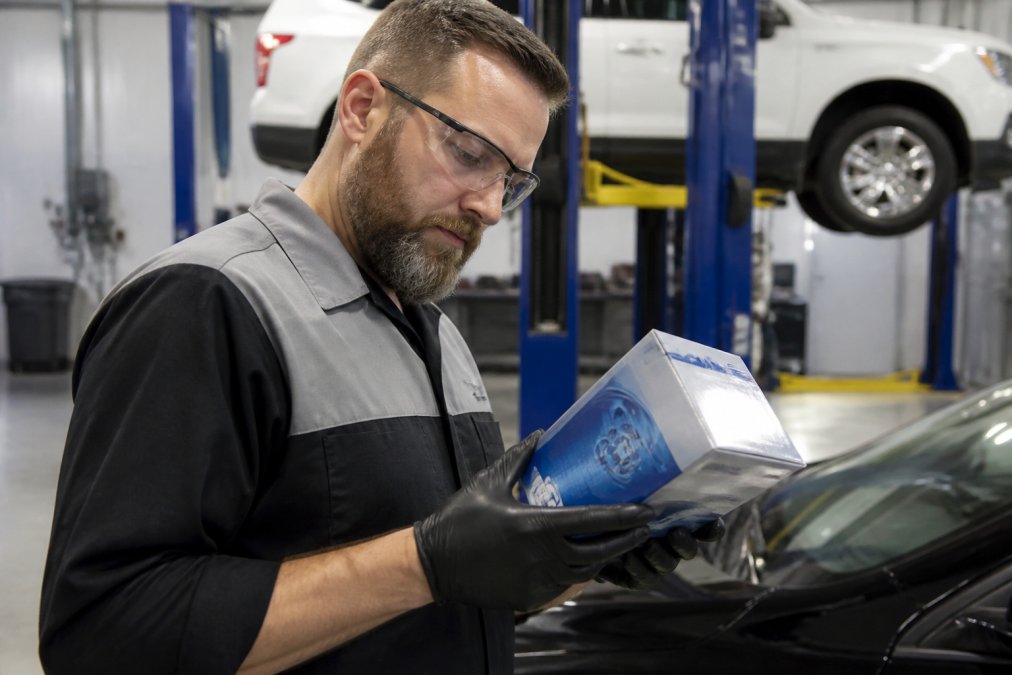
Genuine GM parts use the same alloys, polymers, and composites specified during vehicle development.
These materials are selected for thermal behavior, vibration resistance, and durability under real operating conditions.
Generic aftermarket components often substitute lower-cost materials that degrade faster under stress and heat cycling.
Modern GM vehicles rely on tightly integrated electronic systems where sensors, modules, and actuators communicate through calibrated signal ranges.
A non-OEM sensor may read acceptably on a multimeter but still trigger fault codes because it does not match the original equipment manufacturer's exact output curve, leading to repeat diagnostic visits.
According to the National Highway Traffic Safety Administration's guidance on counterfeit auto parts, substandard automotive components represent a genuine safety risk, particularly in brakes, steering, and airbags.
Sourcing through an authorized GM dealer eliminates that risk entirely.
Ask for Doug Cupples at 641-521-8725, call or text.
OEM vs Aftermarket Parts: Pros and Cons for GM Owners
The OEM vs aftermarket parts debate comes up in nearly every repair conversation. Here is a clear-eyed look at both sides.
Genuine GM OEM Parts, Pros and Cons
Pros:
- Guaranteed fit with no modification required
- Factory-certified materials matched to original specifications
- Maintain vehicle warranty coverage without dispute
- Support resale value through documented service history
- Backed by GM's parts warranty
- Sourced through verified supply chain, reducing counterfeit risk
- Designed to work with GM's onboard diagnostics
Cons:
- Higher upfront cost than aftermarket equivalents
- Availability for older models may require ordering time
Aftermarket Parts, Pros and Cons
Pros:
- Lower upfront cost
- Wide availability from multiple suppliers
- Some premium manufacturers produce quality components
Cons:
Push now for a set of free Universal Weather Teck mats →
- Quality varies significantly across suppliers
- Fitment issues are common on late-model vehicles
- May void manufacturer warranty coverage
- Counterfeit parts identification is harder outside authorized supply chains
- Durability testing often does not match OEM standards
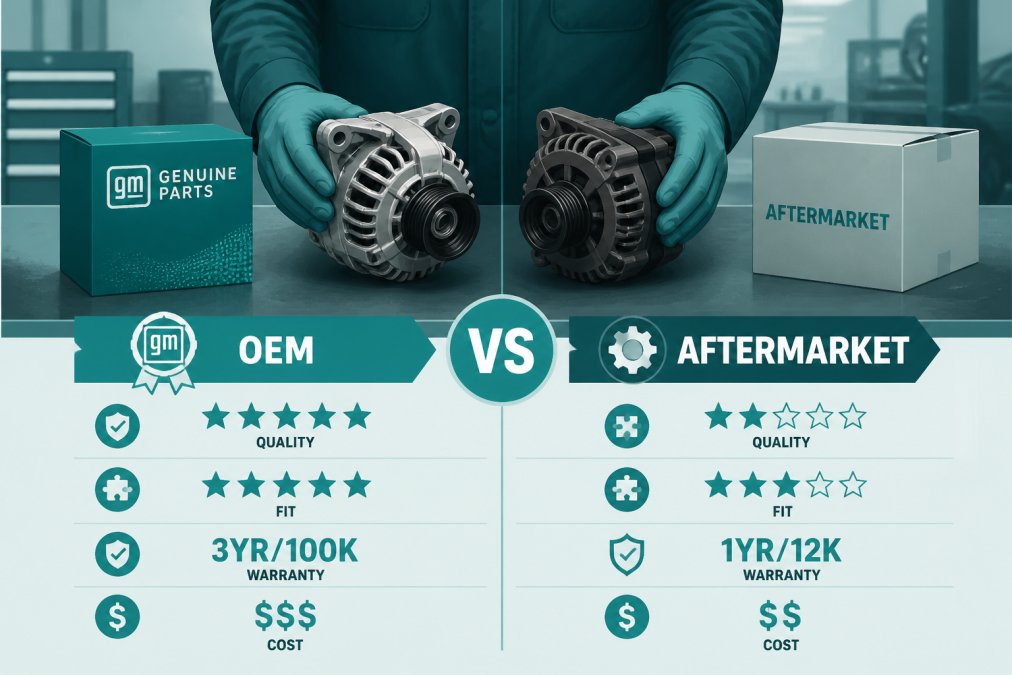
The cost-benefit analysis shifts considerably over the vehicle lifecycle.
A lower-cost aftermarket part that fails in 18 months versus an OEM part lasting the vehicle's life is not actually cheaper when repeat repairs and diagnostic time are factored in.
For insurance claim implications, many auto insurers cover OEM parts for collision repairs on newer vehicles.
Using aftermarket components without insurer approval can complicate claims and reduce payout values.
| Factor | Genuine GM OEM Parts | Aftermarket Parts |
|---|---|---|
| Fitment accuracy | Guaranteed exact fit | Varies by supplier |
| Warranty protection | Fully preserved | May void coverage |
| Material specification | Factory-matched | Often approximated |
| Counterfeit risk | Minimal via authorized dealer | Higher in open market |
| Component lifespan | Designed for vehicle lifecycle | Varies significantly |
| Resale value impact | Positive, documented | Neutral to negative |
| Insurance claim support | Generally accepted | May require approval |
GM Parts Warranty Coverage and What It Protects
Genuine GM parts installed by an authorized dealer come with warranty protection on the component itself.
If a covered part fails within the warranty period due to a defect in materials or workmanship, the replacement cost is covered.
For vehicles still under factory warranty, the stakes are higher. GM's warranty terms specify that repairs performed with non-OEM components can affect warranty coverage on related systems.
A transmission solenoid replaced with an aftermarket part that causes a transmission control module fault creates a situation where the warranty claim on the module is no longer straightforward.
Authorized dealers using genuine GM parts avoid that complication.
Vehicles maintained with factory-certified components hold their mechanical integrity longer because every part contributes to the system as the engineers intended.
Preventative maintenance with genuine GM parts builds a service history that supports both vehicle longevity and resale value.
The certified technicians at Lauterbach Buick-GMC are trained specifically on GM vehicles and use genuine GM parts as standard practice.
For GMC truck owners in Central Iowa who rely on their vehicles for daily utility, that consistency matters.
A vehicle that gets the right part the first time does not come back for repeat repairs.
Ask for Doug Cupples at 641-521-8725, call or text, to schedule a service appointment or discuss your vehicle's maintenance needs.
Protecting a vehicle investment means making decisions that compound over time.
Choosing genuine GM parts for repairs preserves warranty coverage, supports long-term durability, and keeps the vehicle performing as engineered.
The Lauterbach Buick-GMC service team in Newton, Iowa brings certified expertise and factory-certified components to every job.
Schedule a service appointment and ask for Doug Cupples at 641-521-8725.
"What good is it for someone to gain the whole world, yet forfeit their soul?"
Frequently Asked Questions
Are genuine GM parts better than aftermarket parts?
For most repairs on GM vehicles, yes. Genuine GM parts are manufactured to the same technical specifications used when your vehicle was built at the factory.
That means guaranteed fitment, predictable durability, and no compatibility guesswork. Aftermarket quality varies widely — some suppliers meet factory standards, many do not.
When vehicle integrity and safety compliance matter, OEM parts remove the uncertainty that comes with sourcing from unknown supply chains.
Ask for Doug Cupples at 641-521-8725 for guidance on your specific vehicle.
Do genuine GM parts come with a warranty?
Yes. Genuine GM parts installed at a certified dealership service department come with GM parts warranty coverage.
This typically includes a 24-month/unlimited-mile limited warranty on the part itself.
At Lauterbach Buick-GMC in Newton, Iowa, our certified technicians install only genuine GM parts, so your repair is backed by both factory standards and that warranty protection.
Aftermarket components generally carry shorter or more limited warranties, and coverage terms can vary significantly by supplier.
Does using aftermarket parts void my GM vehicle warranty?
Under the federal Magnuson-Moss Warranty Act, a dealer cannot void your entire vehicle warranty simply because you used an aftermarket part.
However, if an aftermarket component causes a specific failure, the manufacturer can deny warranty coverage for that related damage.
Using genuine GM parts at a factory-certified service department eliminates that risk entirely.
Your existing warranty protection stays intact, and there is no dispute about whether a non-OEM component contributed to a mechanical failure.
How can I tell if a GM part is genuine?
Genuine GM parts come in official branded packaging with a GM holographic label and a traceable part number that matches GM's catalog.
Counterfeit parts often have blurry printing, inconsistent packaging, and part numbers that do not verify in GM's system.
The safest approach is to have repairs done at a certified dealership service department, where parts are sourced directly through GM's supply chain.
If you have questions about a part's authenticity, ask for Doug Cupples at 641-521-8725 — we are happy to help.
This article was written using GrandRanker
DougCupples content is educational market commentary, not individualized financial or purchasing advice. Figures reflect the reporting dates shown and move quickly — confirm current numbers before you act on them.
Before you use this information
Auto market guidance works best when it is tied to a real vehicle, a real quote, and a real deadline.
If this article changes how you are thinking about a purchase, save the listing, the VIN, the mileage, the asking price, and the city where the vehicle is advertised.
For a trade-in question, write down your payoff amount, the vehicle condition, and any independent appraisal you already have.
For a financing question, compare the APR, the term, the down payment, the total amount financed, and the full out-the-door number.
Those details make it much easier to separate a fair Central Iowa deal from a monthly payment that only looks comfortable because the loan got longer.
When a price looks appealing, check whether the discount is attached to a required add-on, a longer term, a higher rate, or a trade allowance that moved money from one line to another.
When a vehicle looks expensive, check local supply before you walk away; a scarce trim can hold its number while a similar model across town has room to move.
The practical move is to slow the deal down long enough to compare the total cost, not just the headline price or the payment printed in large type.
Doug can help turn those details into better questions for the salesperson, the sales manager, or the finance office before you sign.
That is especially useful when the decision is close, because small changes in rate, term, fees, trade allowance, or timing can move the real cost by hundreds or thousands of dollars.
If you are shopping around Newton, Des Moines, or the surrounding Central Iowa market, local inventory and dealer supply matter more than a national headline.
- Ask for the out-the-door price in writing before you discuss payment.
- Compare similar vehicles within driving distance, not national averages alone.
- Check how long the specific VIN has been in stock.
- Confirm whether each fee is required by the state, the lender, or the dealership.