Last Updated: November 3, 2026
How to Calculate Towing Capacity Before You Hitch a Trailer
Towing capacity is the maximum weight a vehicle is rated to pull, found on the driver's door jamb sticker and in the owner's manual, not a sales brochure.
Here is the math that actually matters:
- Find the gross combined weight rating (GCWR) in the manual.
- Subtract the loaded vehicle weight, including passengers and cargo.
- The remainder is your real towing capacity in that exact configuration.
Most buyers skip step two, the mistake that strains a transmission on a hill. For practical prep steps, see how to prepare a used truck for towing a fifth wheel.
Watch out: A "max tow" figure usually assumes a base trim, one driver, and no cargo.
SUVs That Can Tow 5,000 lbs and What the Rating Really Means
A 5,000-lb rating means the vehicle passed a manufacturer test under specific conditions that rarely match your Saturday.
Three things change the number:
- Engine choice. A V6 and a turbocharged four-cylinder in the same body often carry different ratings.
- Trim level. Cooling upgrades and hitch equipment are frequently bundled into one package.
- Drivetrain. All-wheel and four-wheel drive models sometimes rate lower than two-wheel drive.
Never assume. Check the door sticker on the exact vehicle you are buying. Shoppers can also compare best used SUVs for towing and outdoor adventures.
Push now for a set of free Universal Weather Teck mats with purchase of a used or new Car →
Towing Safety Tips for SUVs: Payload, Tongue Weight and the 80% Rule
Payload is the weight your SUV can carry, including people, cargo, and tongue weight, almost always the limit you hit first.
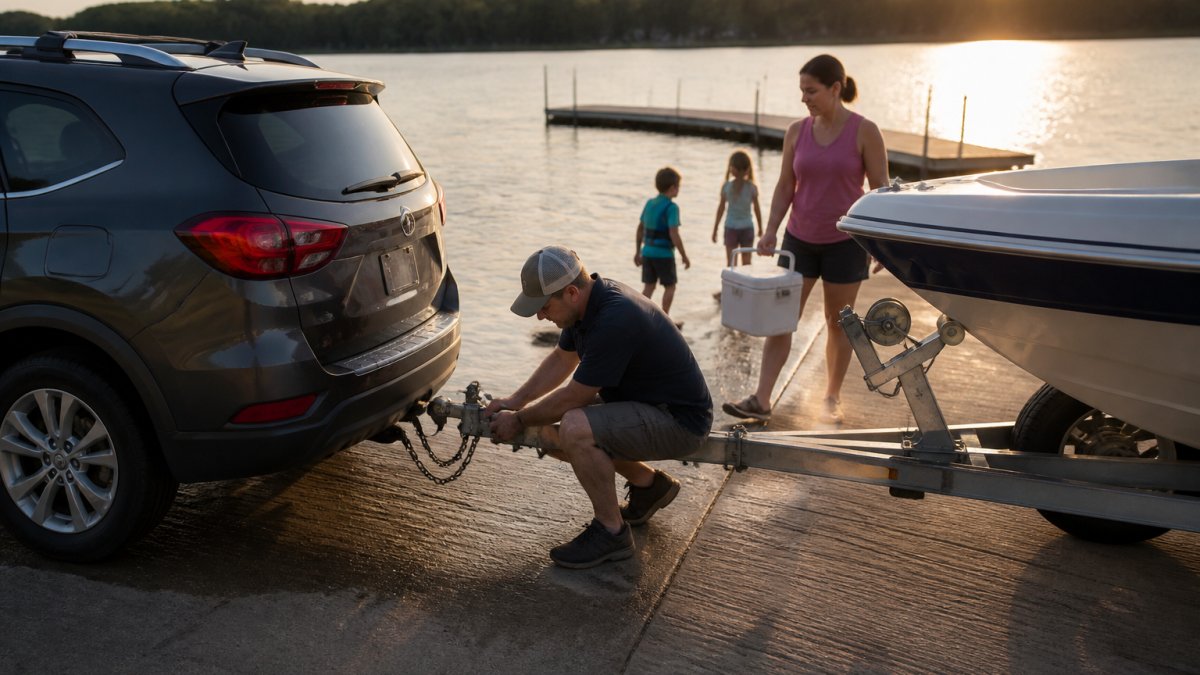
Tongue weight is the downward force the trailer tongue puts on the hitch, typically 10 to 15 percent of loaded trailer weight. Count it against payload, not towing capacity.
The 80% rule: keep loaded trailer weight at or below 80 percent of the rating, leaving margin for hills, heat, and headwinds. Drivers can also review winter-ready SUV picks for Central Iowa.
A roadside emergency kit belongs in every towing vehicle.
Towing capacity is a starting point, not a finish line. If you want a vehicle that matches your actual trailer and your actual family, come see us.
Ask for Doug Cupples at 641-521-8725, text or call. We will help you read the door sticker, match the trim, and confirm the factory tow package before you sign anything.
Get started with Doug Cupples and drive away knowing your setup is right.
"What good is it for someone to gain the whole world, yet forfeit their soul?"

DougCupples content is educational market commentary, not individualized financial or purchasing advice. Figures reflect the reporting dates shown and move quickly — confirm current numbers before you act on them.
Before you use this information
Auto market guidance works best when it is tied to a real vehicle, a real quote, and a real deadline.
If this article changes how you are thinking about a purchase, save the listing, the VIN, the mileage, the asking price, and the city where the vehicle is advertised.
For a trade-in question, write down your payoff amount, the vehicle condition, and any independent appraisal you already have.
For a financing question, compare the APR, the term, the down payment, the total amount financed, and the full out-the-door number.
Those details make it much easier to separate a fair Central Iowa deal from a monthly payment that only looks comfortable because the loan got longer.
When a price looks appealing, check whether the discount is attached to a required add-on, a longer term, a higher rate, or a trade allowance that moved money from one line to another.
When a vehicle looks expensive, check local supply before you walk away; a scarce trim can hold its number while a similar model across town has room to move.
The practical move is to slow the deal down long enough to compare the total cost, not just the headline price or the payment printed in large type.
Doug can help turn those details into better questions for the salesperson, the sales manager, or the finance office before you sign.
That is especially useful when the decision is close, because small changes in rate, term, fees, trade allowance, or timing can move the real cost by hundreds or thousands of dollars.
If you are shopping around Newton, Des Moines, or the surrounding Central Iowa market, local inventory and dealer supply matter more than a national headline.
- Ask for the out-the-door price in writing before you discuss payment.
- Compare similar vehicles within driving distance, not national averages alone.
- Check how long the specific VIN has been in stock.
- Confirm whether each fee is required by the state, the lender, or the dealership.