Table of Contents
- What Are Genuine and Aftermarket Car Parts?
- Pros and Cons of Aftermarket Parts for Your Vehicle
- Does Aftermarket Parts Void Warranty Coverage?
- Genuine vs Aftermarket Car Parts: Cost, Resale Value, and Insurance
Last Updated: August 9, 2026
What Are Genuine and Aftermarket Car Parts?
Choosing between genuine vs aftermarket car parts is one of the most common decisions vehicle owners face when scheduling a repair or routine maintenance.
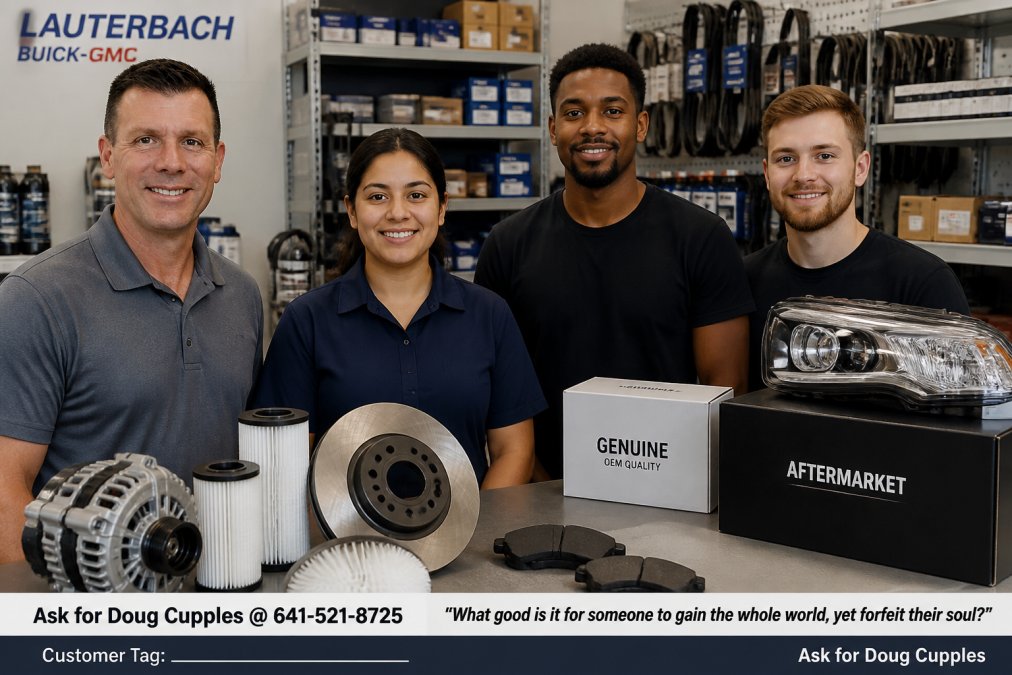
At Doug Cupples and the Lauterbach Buick-GMC service team in Newton, Iowa, this question comes up every day.
Genuine parts (also called OEM parts, short for original equipment manufacturer) are components produced by or for the vehicle's manufacturer to exact factory specifications.
Aftermarket parts are components produced by third-party manufacturers independent of the original automaker.
Quality varies widely, from budget-friendly options to premium components that can match or exceed OEM specifications.
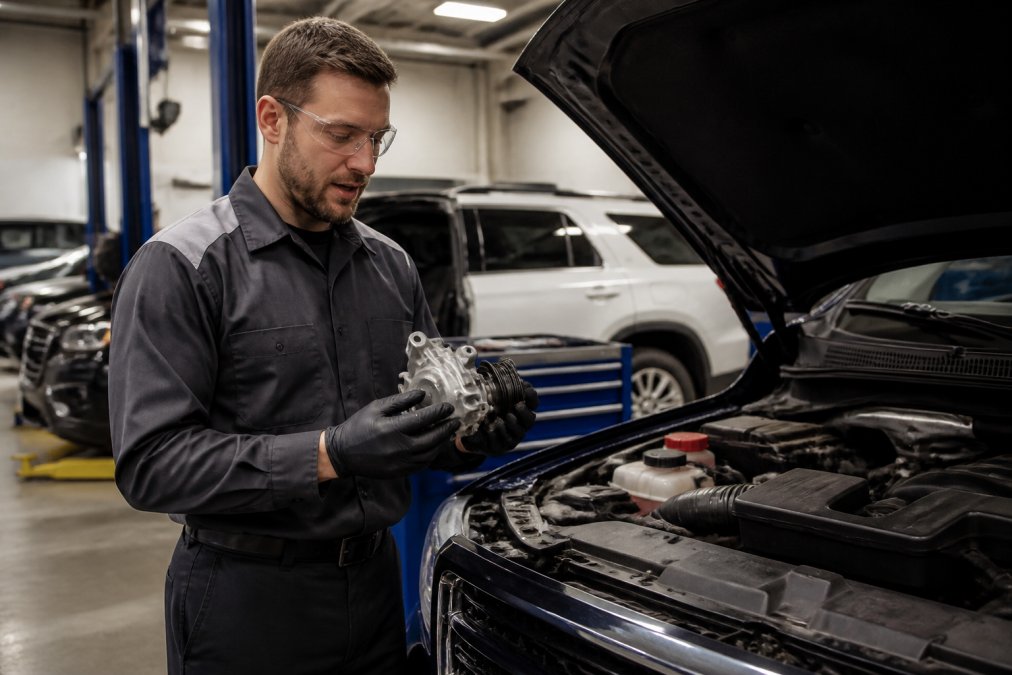
The core difference comes down to standardization. Genuine parts carry the manufacturer's quality control and certification.
Aftermarket components are produced across a fragmented supply chain, meaning a single part category might have dozens of manufacturers offering different quality tiers.
According to the Automotive Aftermarket Industry Association, the U.S. automotive aftermarket is one of the largest consumer product segments in the country.
| Factor | Genuine OEM Parts | Aftermarket Parts |
|---|---|---|
| Fitment | Exact match to factory specs | Varies by manufacturer |
| Quality Control | Manufacturer-certified | Varies widely |
| Price Point | Generally higher | Generally lower |
| Availability | Dealer and certified service | Wide retail and online |
| Warranty Coverage | Typically preserved | May affect warranty |
| Best For | Warranty-active vehicles, CPO | Budget repairs, older vehicles |
Pros and Cons of Aftermarket Parts for Your Vehicle
Aftermarket car parts are not automatically inferior. The real story is more nuanced, and knowing it helps vehicle owners make smarter decisions.
Pros of aftermarket parts:
- Lower price point makes repairs more accessible
- Wide availability through retailers like NAPA Auto Parts, RockAuto, and 1A Auto
- Performance-oriented aftermarket parts can outperform OEM in specific applications
- Greater variety for older vehicles where OEM parts may be discontinued
Cons of aftermarket parts:
- Quality varies significantly between manufacturers
- Fitment is not always guaranteed to match factory specifications
- Counterfeit parts are a real risk in the aftermarket supply chain
- Some parts may not meet the same safety standards as OEM components
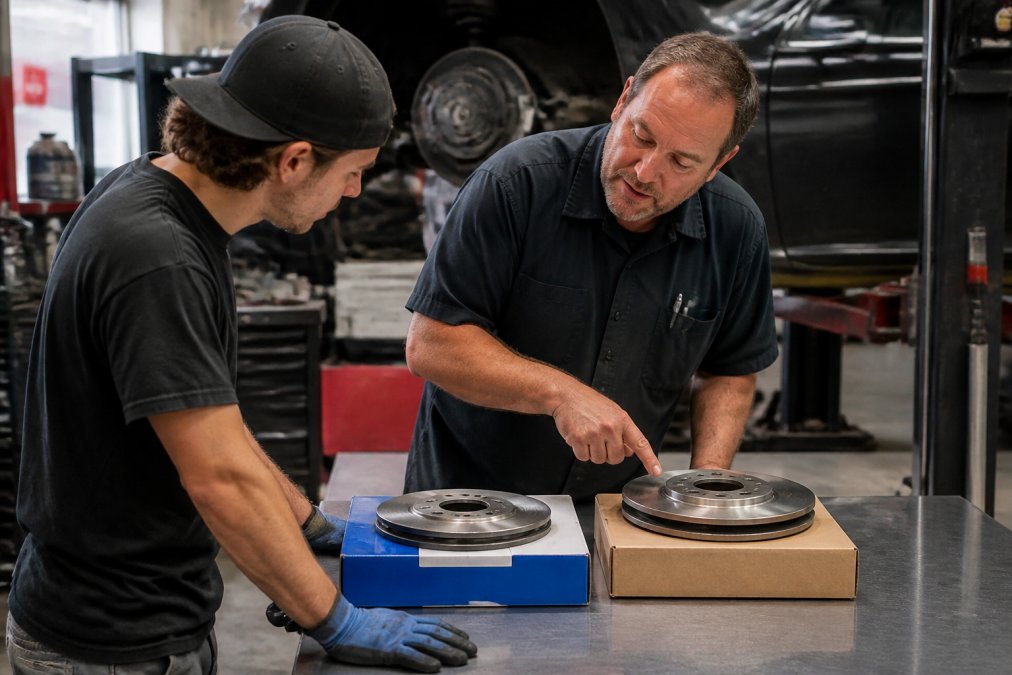
The distinction between budget aftermarket and performance aftermarket matters.
A low-cost brake pad from an unverified source is a completely different product category than premium pads from a reputable supplier that meets or exceeds OEM standards.
For safety-critical systems like brakes, steering, and airbag sensors, prioritize certified parts with verified quality control.
For non-critical components on older, out-of-warranty vehicles, reputable aftermarket options can deliver solid reliability at lower cost.
Does Aftermarket Parts Void Warranty Coverage?
Using aftermarket parts does not automatically void a vehicle's warranty.
Under the Magnuson-Moss Warranty Act, a vehicle manufacturer cannot void a warranty simply because an owner used an aftermarket part, unless the manufacturer can demonstrate that the aftermarket part caused the specific failure being claimed.
If a driver installs an aftermarket air filter and later has a transmission issue, the manufacturer cannot deny the transmission warranty claim solely because of the air filter.
However, if an aftermarket part directly causes or contributes to a failure, the manufacturer has grounds to deny the related warranty claim.
Genuine vs Aftermarket Car Parts: Cost, Resale Value, and Insurance
Cost is the most visible difference between genuine and aftermarket car parts, but it is not the only financial factor worth weighing.
Push now for a set of free Universal Weather Teck mats →
Genuine OEM parts typically cost more than aftermarket equivalents. The price premium reflects manufacturer quality control, certified fitment, and dealer service infrastructure.
Vehicle maintenance history affects resale value, documented use of genuine parts at certified service centers is a positive signal to buyers.
When a vehicle is repaired after an insurance claim, insurers sometimes specify aftermarket parts to control repair costs.
Owners have the right to understand what parts are being used and, in many states, to request OEM parts. The Insurance Information Institute notes that policies vary on this point.
Aftermarket parts are generally more accessible to DIY installers, with retailers like 1A Auto providing extensive repair video libraries.
Genuine OEM parts are typically installed through dealer service centers or certified independent mechanics with manufacturer training.
For Buick and GMC owners in Central Iowa, the certified service team at Lauterbach Buick-GMC uses genuine GM parts on every repair and maintenance service.
Ask for Doug Cupples at 641-521-8725 to discuss service options for your vehicle.
Keeping a vehicle reliable comes down to making informed decisions at every service interval. Call or text Doug Cupples at 641-521-8725.
"What good is it for someone to gain the whole world, yet forfeit their soul?"
Ask for Doug Cupples
Frequently Asked Questions
Are genuine OEM parts better than aftermarket parts?
Genuine OEM parts are manufactured to factory specifications, guaranteeing exact fitment and compatibility with your vehicle.
Aftermarket parts vary widely in quality depending on the manufacturer.
For critical systems like brakes, suspension, or engine components, genuine parts offer more predictable performance reliability.
For lower-stakes repairs on older vehicles, a reputable aftermarket brand can be a practical, budget-friendly alternative.
Ask for Doug Cupples at 641-521-8725 to discuss what fits your specific situation.
Does using aftermarket parts void my vehicle's warranty?
Under the federal Magnuson-Moss Warranty Act, a dealer or manufacturer cannot void your warranty simply because you used an aftermarket part, unless they can prove that specific part caused the failure.
However, if an aftermarket component damages a covered system, that damage may not be covered.
To protect your warranty coverage fully, using genuine GM parts at a certified dealership service department is the safest approach, especially on newer vehicles still under factory warranty.
What is the main difference between genuine and aftermarket car parts?
Genuine parts come directly from the original equipment manufacturer and are built to the exact technical specifications your vehicle was designed around.
Aftermarket components are produced by third-party manufacturers and are designed to fit multiple makes and models.
This broader standardization can mean minor differences in materials, durability, or fitment.
Genuine parts carry the vehicle maker's quality control stamp; aftermarket parts range from budget economy tiers to performance-grade upgrades.
How can I tell if a car part is genuine or a counterfeit?
Genuine parts arrive in branded manufacturer packaging with part numbers that match your vehicle's documentation.
Counterfeits often have blurry logos, inconsistent fonts, or missing certification markings. Weight and finish quality frequently differ from the real component.
The safest way to avoid counterfeit parts is to source replacement parts through a certified dealership service department, where every part is traceable back to the original equipment manufacturer.
Do aftermarket parts affect my vehicle's resale value?
A documented service history using genuine OEM parts typically supports a stronger resale value, particularly for Buick and GMC vehicles.
Buyers and appraisers look for consistent dealer service records.
Aftermarket parts do not automatically reduce resale value, but non-certified modifications or low-quality components can raise concerns during inspection.
Keeping receipts and service records for any aftermarket work helps demonstrate that quality replacement parts were used.
This article was written using GrandRanker
DougCupples content is educational market commentary, not individualized financial or purchasing advice. Figures reflect the reporting dates shown and move quickly — confirm current numbers before you act on them.
Before you use this information
Auto market guidance works best when it is tied to a real vehicle, a real quote, and a real deadline.
If this article changes how you are thinking about a purchase, save the listing, the VIN, the mileage, the asking price, and the city where the vehicle is advertised.
For a trade-in question, write down your payoff amount, the vehicle condition, and any independent appraisal you already have.
For a financing question, compare the APR, the term, the down payment, the total amount financed, and the full out-the-door number.
Those details make it much easier to separate a fair Central Iowa deal from a monthly payment that only looks comfortable because the loan got longer.
When a price looks appealing, check whether the discount is attached to a required add-on, a longer term, a higher rate, or a trade allowance that moved money from one line to another.
When a vehicle looks expensive, check local supply before you walk away; a scarce trim can hold its number while a similar model across town has room to move.
The practical move is to slow the deal down long enough to compare the total cost, not just the headline price or the payment printed in large type.
Doug can help turn those details into better questions for the salesperson, the sales manager, or the finance office before you sign.
That is especially useful when the decision is close, because small changes in rate, term, fees, trade allowance, or timing can move the real cost by hundreds or thousands of dollars.
If you are shopping around Newton, Des Moines, or the surrounding Central Iowa market, local inventory and dealer supply matter more than a national headline.
- Ask for the out-the-door price in writing before you discuss payment.
- Compare similar vehicles within driving distance, not national averages alone.
- Check how long the specific VIN has been in stock.
- Confirm whether each fee is required by the state, the lender, or the dealership.