Table of Contents
- How We Ranked the Best Pre-Owned SUV Models for 2026
- Quick Comparison: Top Pre-Owned SUVs at a Glance
- Compact SUV Rankings: Reliability, MPG, and Value
- 1. Toyota RAV4: The Benchmark for Long-Term Dependability
- 2. Honda CR-V: Best-in-Class Cargo Space and Safety Tech
- 3. Mazda CX-5: Upscale Interior Without the Luxury Price Tag
- 4. Subaru Forester: Standard AWD and High Ground Clearance
- 5. Hyundai Tucson and Kia Sportage: Budget-Friendly Options Worth Considering
- Luxury SUV Rankings: Acura RDX, Lexus RX, and BMW X3
- Used SUV Depreciation Rates: Which Models Hold Their Value
- Certified Pre-Owned vs Used SUVs: What the Difference Actually Costs You
- How to Inspect a Used Car Before You Buy
- Which Pre-Owned SUV Should You Choose?
Last Updated: August 6, 2026
Finding a reliable pre-owned SUV has never been more competitive, and the wrong choice can cost thousands in unexpected repairs within the first year of ownership.
At Doug Cupples and the team at Lauterbach Buick-GMC in Newton, Iowa, we've helped Central Iowa families cut through the noise to find pre-owned SUVs that actually hold up.
This guide ranks the best pre-owned SUV models for 2026 across compact, midsize, and luxury segments, with honest assessments of depreciation, ownership costs, and which trim levels are worth the premium.
A certified pre-owned SUV is a used vehicle that has passed a manufacturer-approved multi-point inspection and comes with an extended powertrain warranty, providing significantly more buyer protection than a standard used vehicle purchase.
How We Ranked the Best Pre-Owned SUVs for 2026
Our ranking methodology weighs four criteria equally: long-term reliability data, fuel economy, total cost of ownership, and real-world owner sentiment.
We cross-referenced manufacturer reliability ratings, cargo volume specs, safety feature availability, and crash test ratings from the NHTSA vehicle safety ratings database.
We excluded models with known transmission performance issues on specific production years and flagged any SUV where annual repair costs trend significantly above segment average.
Quick Comparison: Top Pre-Owned SUVs at a Glance
Quick Picks:
- Best Overall: Toyota RAV4 - benchmark reliability with the best resale value in class
- Best Cargo Space: Honda CR-V - class-leading interior room for families
- Best Driving Feel: Mazda CX-5 - upscale cabin, responsive handling
- Best AWD Value: Subaru Forester - standard all-wheel drive on every trim
- Best Budget Option: Hyundai Tucson or Kia Sportage - faster depreciation means lower entry price
- Best Luxury Value: Acura RDX - premium experience without flagship ownership costs
| Model | Segment | Standout Feature | Best For |
|---|---|---|---|
| Toyota RAV4 | Compact | Reliability index 4.0/5.0 | Long-term ownership |
| Honda CR-V | Compact | Best-in-class cargo space | Families |
| Mazda CX-5 | Compact | Upscale interior | Driving enthusiasts |
| Subaru Forester | Compact | Standard AWD | Iowa winters |
| Hyundai Tucson | Compact | Faster depreciation | Budget buyers |
| Kia Sportage | Compact | Feature-rich interior | Value seekers |
| Acura RDX | Luxury | Honda reliability backbone | Luxury on a budget |
| Lexus RX | Luxury | Refinement and quiet ride | Comfort priority |
| BMW X3 | Luxury | Sporty driving dynamics | Performance buyers |
Compact SUV Rankings: Reliability, MPG, and Value
The compact SUV segment delivers the best pre-owned value.
High production volumes, widespread parts availability, and strong reliability data across multiple model years make this the smart starting point for most buyers.
1. Toyota RAV4: The Benchmark for Long-Term Dependability
The Toyota RAV4 earns the top spot because no other compact SUV combines reliability, resale value, and ownership cost predictability as consistently.
RepairPal rates it 4.0 out of 5.0 for reliability across multiple model years. Gas models deliver up to 35 MPG highway; hybrid models reach 40 MPG combined.
Toyota Safety Sense is standard across most trims from 2019 onward, including blind-spot monitoring, adaptive cruise control, and lane-keeping.
The RAV4 XLE trim hits the sweet spot in the used market, offering most safety tech and interior upgrades without the price jump of higher trims.
Pros: Exceptional long-term reliability, strong resale value, hybrid option available Cons: Higher used prices due to slow depreciation; base trim driving dynamics feel uninspired
2. Honda CR-V: Best-in-Class Cargo Space and Safety Tech
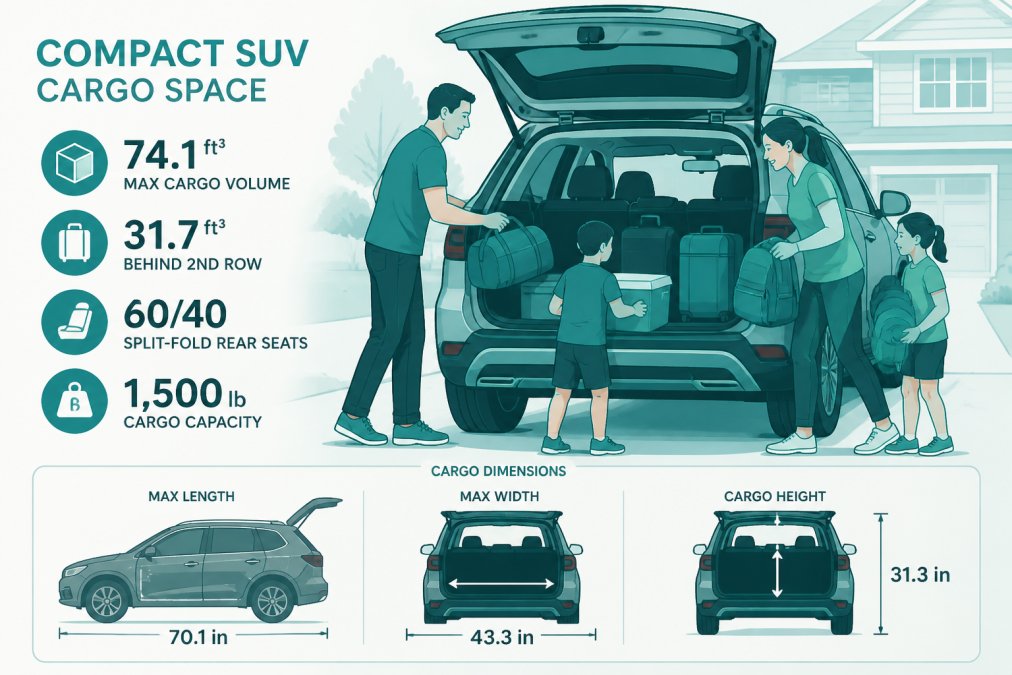
The CR-V wins on cargo space and has earned Kelley Blue Book Best Buy Awards across multiple years. The available hybrid powertrain improves fuel economy meaningfully.
Honda's driver-assistance systems are standard on most trims from 2017 onward.
Pros: Generous passenger and cargo room, strong reliability reputation, hybrid available Cons: Higher demand leads to elevated used pricing; driving feel is functional rather than engaging
3. Mazda CX-5: Upscale Interior Without the Luxury Price Tag
The CX-5 offers interior design and material quality that punch above the segment.
The cabin is quieter, seats more supportive, and the infotainment interface more intuitive than mainstream competitors.
Available all-wheel drive across most trims makes it practical year-round in Iowa. The six-speed automatic transmission performs more naturally than CVTs found in rivals.
The limitation: cargo volume runs slightly smaller than the RAV4 and CR-V.
Pros: Premium interior quality, responsive handling, good reliability ratings Cons: Slightly less cargo space than top rivals; rear legroom limited for taller adults
4. Subaru Forester: Standard AWD and High Ground Clearance
The Forester offers standard Symmetrical All-Wheel Drive on every trim, combined with excellent ground clearance and long-term dependability.
The spacious interior and practical design appeal to outdoor-oriented buyers. The CVT transmission divides opinion, smooth and efficient but sometimes feeling disconnected.
Pros: Standard AWD on all trims, high ground clearance, excellent long-term reliability Cons: CVT may not suit all drivers; older model infotainment lags behind competitors
5. Hyundai Tucson and Kia Sportage: Budget-Friendly Options Worth Considering
Faster depreciation than Japanese competitors creates genuine buying opportunities in the pre-owned market.
The Tucson comes equipped with Hyundai SmartSense safety features on most trims, including forward collision-avoidance assist and lane keeping assist.
The Sportage offers an eight-inch touchscreen with Apple CarPlay and Android Auto as standard, along with heated front seats and dual-zone climate control on mid-range trims.
Both carry stronger warranty coverage than many rivals.
Pros: Lower used prices due to faster depreciation, modern safety tech, strong warranty coverage Cons: Depreciate faster; some earlier model interior quality concerns
Luxury SUV Rankings: Acura RDX, Lexus RX, and BMW X3
Buying a pre-owned luxury SUV involves higher ownership costs, maintenance complexity, and parts pricing.
The Acura RDX runs on Honda's engineering backbone, meaning reliability trends closer to mainstream Japanese brands than European luxury competitors.
The interior is genuinely premium with engaging driving dynamics.
The Lexus RX prioritizes refinement above everything else.
According to Consumer Reports reliability ratings for luxury SUVs, the Lexus RX consistently ranks among the most reliable luxury vehicles in its segment.
Pre-2020 infotainment systems feel outdated, and maintenance costs run higher than non-luxury brands.
The BMW X3 suits buyers who want sporty driving dynamics and don't mind paying for them.
Ownership costs are higher, maintenance more complex, and annual repair costs trend above both the RDX and RX. For buyers prioritizing performance over economy, it delivers.
For everyone else, the Acura RDX offers 80% of the experience at meaningfully lower total cost of ownership.
Used SUV Depreciation Rates: Which Models Hold Their Value
Depreciation rate is the single most misunderstood factor in pre-owned SUV buying. A vehicle that holds value well costs more upfront but less to own long-term.
A vehicle with fast depreciation costs less upfront but loses value faster if you sell.
| Model | Depreciation Profile | Buyer Implication |
|---|---|---|
| Toyota RAV4 | Slow depreciation, strong resale value | Higher used price, strong long-term value |
| Honda CR-V | Moderate-slow depreciation | Reliable resale, moderate used pricing |
| Mazda CX-5 | Moderate depreciation | Good balance of price and retained value |
| Subaru Forester | Moderate depreciation | AWD premium holds reasonably well |
| Hyundai Tucson | Faster depreciation | Lower used prices, weaker resale |
| Kia Sportage | Faster depreciation | Best entry price, lower resale |
| Acura RDX | Moderate luxury depreciation | Better value retention than European rivals |
| Lexus RX | Slow depreciation | Premium used prices, strong long-term hold |
| BMW X3 | Moderate-fast luxury depreciation | Lower used prices vs. Lexus, higher ownership costs |
If you plan to keep your SUV for five or more years, the RAV4 and Lexus RX make strong financial sense despite higher entry prices.
For a three-year ownership window, the Hyundai Tucson and Kia Sportage offer the best market value.
Certified Pre-Owned vs Used SUVs: What the Difference Actually Costs You
A certified pre-owned SUV has passed a manufacturer-approved multi-point inspection, meets mileage and age restrictions, and comes with an extended warranty.
At Lauterbach Buick-GMC, CPO vehicles come backed by a 6-year/100,000-mile Powertrain Limited Warranty and a 12-Month/12,000-Mile Bumper-to-Bumper Limited Warranty.
A standard used SUV carries no inspection guarantee beyond what the dealer chooses to perform and no manufacturer warranty unless the original factory warranty still applies.
When CPO makes financial sense: You're buying a luxury SUV where a single major repair could cost thousands, you plan to keep the vehicle for 4+ years, you don't have a trusted independent mechanic for pre-purchase inspection, or you want financing options with manufacturer-backed rates.
When standard used may be the better call: The vehicle is low-mileage and still under original factory powertrain warranty, you have a mechanic you trust and plan a thorough pre-purchase inspection, or the price gap between CPO and non-CPO exceeds realistic repair costs.
How to Inspect a Used Car Before You Buy
A mechanical inspection before purchase is the single most effective way to avoid buying someone else's problem.
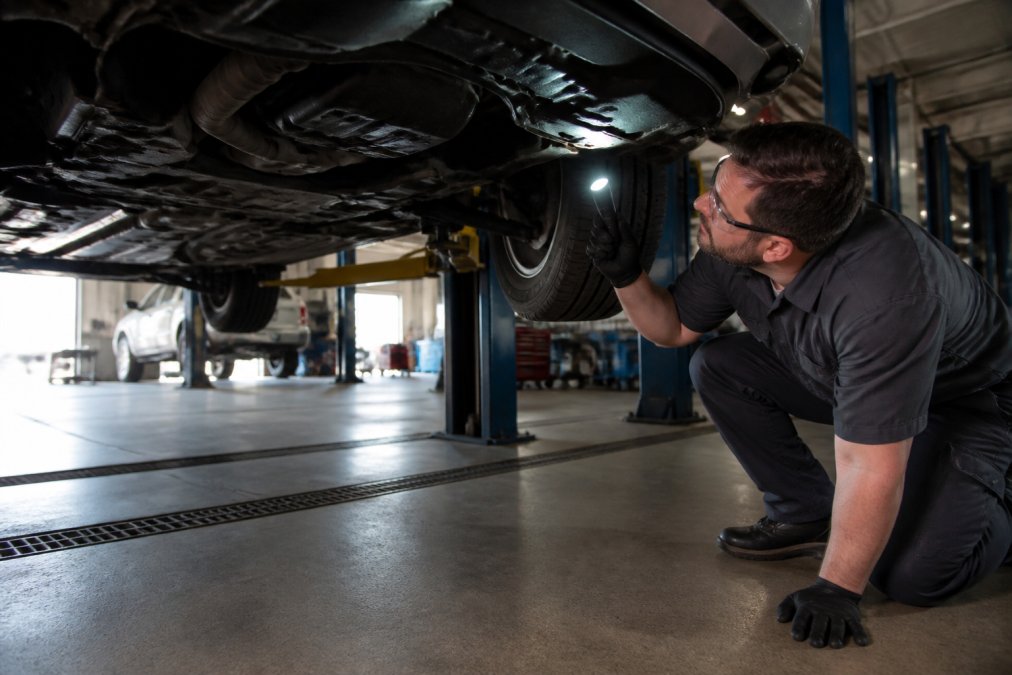
Pre-Purchase Inspection Checklist:
- Request the full vehicle history report and review for accidents, title issues, and odometer discrepancies
- Check all fluid levels: engine oil, transmission fluid, coolant, brake fluid
- Inspect tires for uneven wear patterns
- Test all driver-assistance systems: blind-spot monitoring, adaptive cruise control, lane-keeping
- Check the infotainment interface for full functionality
- Inspect the undercarriage for rust, especially on Iowa vehicles with winter road salt exposure
- Test all-wheel drive engagement if AWD-equipped
- Check cargo space latches, fold-down mechanisms, and weatherstripping
- Run an OBD-II diagnostic scan for stored fault codes
- Verify the VIN on the dashboard matches the door jamb and title documents
For any vehicle not purchased through a certified program, have an independent mechanic perform a full inspection before finalizing the deal.
The Carfax vehicle history reports database is one widely used resource for checking a vehicle's reported history.
Which Pre-Owned SUV Should You Choose?
The right pre-owned SUV depends on three questions: How long do you plan to own it? What's your tolerance for ownership cost variability? What does your daily use actually require?
For most Central Iowa families prioritizing long-term reliability and low annual repair costs, the Toyota RAV4 remains the benchmark.
The Honda CR-V is the better choice if interior space and safety tech are deciding factors.
If Iowa winters are a primary concern, the Subaru Forester's standard all-wheel drive and ground clearance make it the most logical choice in the compact segment.
Budget-conscious buyers wanting modern features should start with the Hyundai Tucson or Kia Sportage.
For buyers stepping into the luxury segment, the Acura RDX offers the most sensible total cost of ownership. The Lexus RX is right if refinement and long-term reliability are non-negotiable.
The BMW X3 suits buyers prioritizing driving dynamics and prepared for associated ownership costs.
The Edmunds used car values and buyer guides is a useful reference for current market pricing before you negotiate.
| Buyer Profile | Best Match | Key Reason |
|---|---|---|
| Long-term family use | Toyota RAV4 | Reliability index, resale value |
| Maximum interior space | Honda CR-V | Best-in-class cargo volume |
| Iowa winter driving | Subaru Forester | Standard AWD, ground clearance |
| Budget-conscious | Hyundai Tucson / Kia Sportage | Faster depreciation, lower price |
| Upscale feel, compact budget | Mazda CX-5 | Premium interior, lower price than luxury |
| Luxury without high repair risk | Acura RDX | Honda reliability, premium experience |
| Comfort and refinement | Lexus RX | Exceptional build quality, smooth ride |
| Sporty luxury | BMW X3 | Driving dynamics, premium materials |
Buying a pre-owned SUV from a certified dealership with trained technicians and genuine parts means knowing that the vehicle has been inspected by someone who actually knows what they're looking at.
Finding the right pre-owned SUV means balancing reliability, ownership costs, and the features that fit your actual life.
At Lauterbach Buick-GMC in Newton, Iowa, Doug Cupples and the team offer thoroughly inspected, reconditioned pre-owned vehicles backed by a 6-year/100,000-mile Powertrain Limited Warranty and 12-Month/12,000-Mile Bumper-to-Bumper Limited Warranty, with certified technicians using genuine GM parts.
Schedule a test drive today and find the pre-owned SUV that's right for Central Iowa roads and your family's needs.
Frequently Asked Questions
What are the best pre-owned SUV models to buy in 2026?
The Toyota RAV4, Honda CR-V, and Mazda CX-5 consistently rank at the top for pre-owned SUV buyers in 2026.
The RAV4 earns a 4.0 out of 5.0 reliability index score from RepairPal, the CR-V delivers some of the best cargo space in its class, and the CX-5 offers an upscale interior at a mainstream price.
For luxury buyers, the Acura RDX and Lexus RX offer premium features with strong long-term dependability.
The right choice depends on your budget, mileage needs, and whether you prioritize fuel economy or cargo volume.
How many miles is too many for a used SUV?
There is no universal cutoff, but most buyers treat 100,000 miles as a general threshold requiring extra scrutiny.
A well-maintained SUV from a reliable brand like Toyota or Honda can run well past 150,000 miles with proper maintenance.
What matters more than mileage alone is the vehicle history report, maintenance schedule records, and a thorough mechanical inspection before purchase.
A certified pre-owned SUV with 60,000 miles and full service records is often a safer buy than a private-sale vehicle with 40,000 miles and no documentation.
What is the difference between a certified pre-owned SUV and a regular used SUV?
A certified pre-owned SUV has passed a manufacturer-approved multi-point inspection and comes backed by a factory powertrain warranty, often extending 6 years or 100,000 miles.
Regular used vehicles are sold as-is or with limited dealer guarantees and no factory coverage.
CPO vehicles also typically include a vehicle history report and may qualify for lower financing rates.
The upfront cost is higher, but the warranty coverage and inspection process reduce the risk of unexpected repair bills shortly after purchase.
Which used SUVs should you avoid buying in 2026?
Avoid pre-owned SUVs with incomplete service records, salvage titles, or a history of major structural repairs shown on the vehicle history report.
Models with known transmission performance issues or expensive infotainment interface failures in specific model years also warrant caution.
Regardless of brand, any used SUV skipping a pre-purchase mechanical inspection is a risk.
Prioritize models with strong reliability index scores and low annual repair costs, and always verify that driver-assistance systems like blind-spot monitoring and adaptive cruise control are fully functional before signing.
Are hybrid or plug-in hybrid used SUVs worth buying?
Used hybrid SUVs like the Toyota RAV4 Hybrid offer excellent fuel economy, often achieving 40 MPG combined, and hybrid powertrains have proven durable over high mileage in models with long track records.
Plug-in hybrid SUVs add electric range but require battery health verification before purchase, since battery replacement costs can be significant.
For Central Iowa commuters covering predictable daily distances, a used hybrid SUV can meaningfully reduce fuel costs over time.
Ask for battery diagnostic records and confirm the powertrain warranty status before committing to any used hybrid or PHEV.
This article was written using GrandRanker
DougCupples content is educational market commentary, not individualized financial or purchasing advice. Figures reflect the reporting dates shown and move quickly — confirm current numbers before you act on them.
Before you use this information
Auto market guidance works best when it is tied to a real vehicle, a real quote, and a real deadline.
If this article changes how you are thinking about a purchase, save the listing, the VIN, the mileage, the asking price, and the city where the vehicle is advertised.
For a trade-in question, write down your payoff amount, the vehicle condition, and any independent appraisal you already have.
For a financing question, compare the APR, the term, the down payment, the total amount financed, and the full out-the-door number.
Those details make it much easier to separate a fair Central Iowa deal from a monthly payment that only looks comfortable because the loan got longer.
When a price looks appealing, check whether the discount is attached to a required add-on, a longer term, a higher rate, or a trade allowance that moved money from one line to another.
When a vehicle looks expensive, check local supply before you walk away; a scarce trim can hold its number while a similar model across town has room to move.
The practical move is to slow the deal down long enough to compare the total cost, not just the headline price or the payment printed in large type.
Doug can help turn those details into better questions for the salesperson, the sales manager, or the finance office before you sign.
That is especially useful when the decision is close, because small changes in rate, term, fees, trade allowance, or timing can move the real cost by hundreds or thousands of dollars.
If you are shopping around Newton, Des Moines, or the surrounding Central Iowa market, local inventory and dealer supply matter more than a national headline.
- Ask for the out-the-door price in writing before you discuss payment.
- Compare similar vehicles within driving distance, not national averages alone.
- Check how long the specific VIN has been in stock.
- Confirm whether each fee is required by the state, the lender, or the dealership.