
Last Updated: September 22, 2026
7 Signs Your Truck Needs a Transmission Flush
Your truck's transmission is critical to staying on the road. Small warning signs can mean big repair bills, recognize them early. Ask for Doug Cupples.
1. Difficulty Shifting Gears
When your truck hesitates or struggles to shift, dirty or low transmission fluid is usually the culprit. Lag, grinding sounds, or refusal to engage a gear worsen over time.
2. Slipping Gears
Gear slipping means your truck unexpectedly drops out of gear or loses power mid-acceleration.
3. Delayed Acceleration
A noticeable pause before acceleration indicates transmission fluid is breaking down.
4. Transmission Fluid Color and Smell
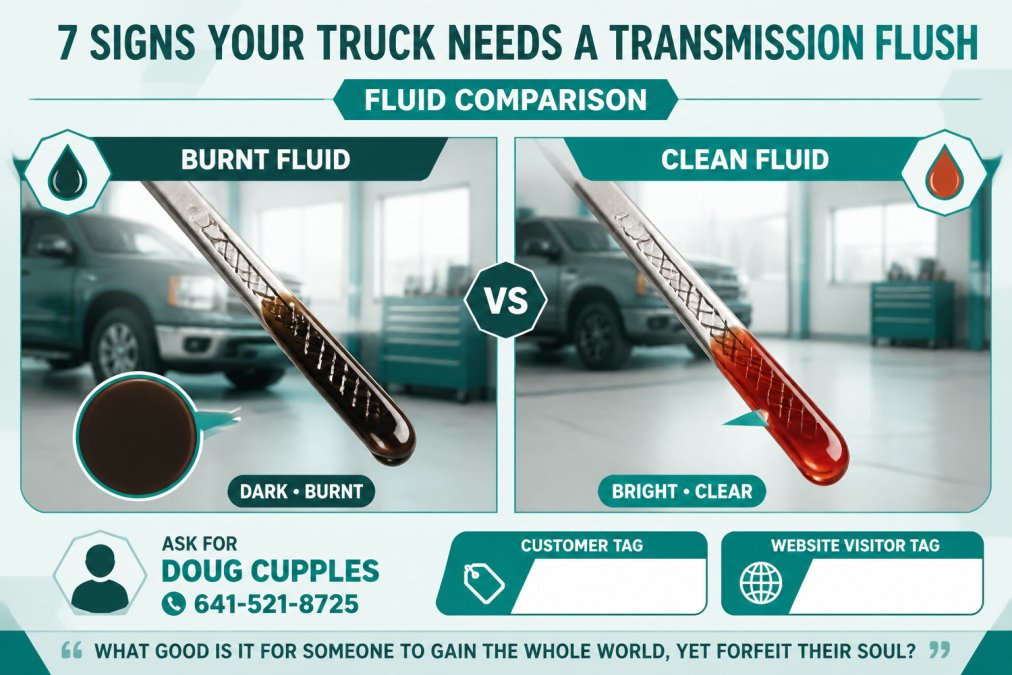
Healthy transmission fluid is bright red; old fluid turns dark brown or black with burnt smells indicating overheating.
5. Transmission Whine or Grinding Noises
A high-pitched whine or grinding sound indicates metal-to-metal contact and potential internal damage.
Push now for a set of free Universal Weather Teck mats with purchase of a used or new Car →
6. Check Engine Light Warnings
A check engine light signals transmission fluid degradation; a flush often clears these codes if caught early.
7. Leaking Transmission Fluid
Puddles under your truck indicate leaks that cause overheating and failure.
Transmission Flush vs Drain and Fill: What You Need to Know
A drain and fill removes 50% of old fluid; a flush removes 85-95%, making it better for symptomatic trucks.
Understanding Your Transmission Fluid Change Interval
Most GMC trucks need a transmission fluid change every 30,000 to 60,000 miles; severe driving or towing shortens this interval.
Ask for Doug Cupples at 641-521-8725. Text or call.
What good is it for someone to gain the whole world, yet forfeit their soul?
DougCupples content is educational market commentary, not individualized financial or purchasing advice. Figures reflect the reporting dates shown and move quickly — confirm current numbers before you act on them.
Before you use this information
Auto market guidance works best when it is tied to a real vehicle, a real quote, and a real deadline.
If this article changes how you are thinking about a purchase, save the listing, the VIN, the mileage, the asking price, and the city where the vehicle is advertised.
For a trade-in question, write down your payoff amount, the vehicle condition, and any independent appraisal you already have.
For a financing question, compare the APR, the term, the down payment, the total amount financed, and the full out-the-door number.
Those details make it much easier to separate a fair Central Iowa deal from a monthly payment that only looks comfortable because the loan got longer.
When a price looks appealing, check whether the discount is attached to a required add-on, a longer term, a higher rate, or a trade allowance that moved money from one line to another.
When a vehicle looks expensive, check local supply before you walk away; a scarce trim can hold its number while a similar model across town has room to move.
The practical move is to slow the deal down long enough to compare the total cost, not just the headline price or the payment printed in large type.
Doug can help turn those details into better questions for the salesperson, the sales manager, or the finance office before you sign.
That is especially useful when the decision is close, because small changes in rate, term, fees, trade allowance, or timing can move the real cost by hundreds or thousands of dollars.
If you are shopping around Newton, Des Moines, or the surrounding Central Iowa market, local inventory and dealer supply matter more than a national headline.
- Ask for the out-the-door price in writing before you discuss payment.
- Compare similar vehicles within driving distance, not national averages alone.
- Check how long the specific VIN has been in stock.
- Confirm whether each fee is required by the state, the lender, or the dealership.